

In our modern, hyper-connected world, the silence of the mind has become a rare luxury. We are bombarded with notifications, deadlines, and social pressures that leave our nervous systems in a state of perpetual high alert. If you are reading this, you are likely looking for an anchor—something deeper than a generic breathing app or a weekend getaway. You are looking for a way to rewire your inner landscape. Learning how to improve mental health with Shiva mantras is not just about religious devotion; it is an ancient psychological technology designed to still the storms of the subconscious mind.
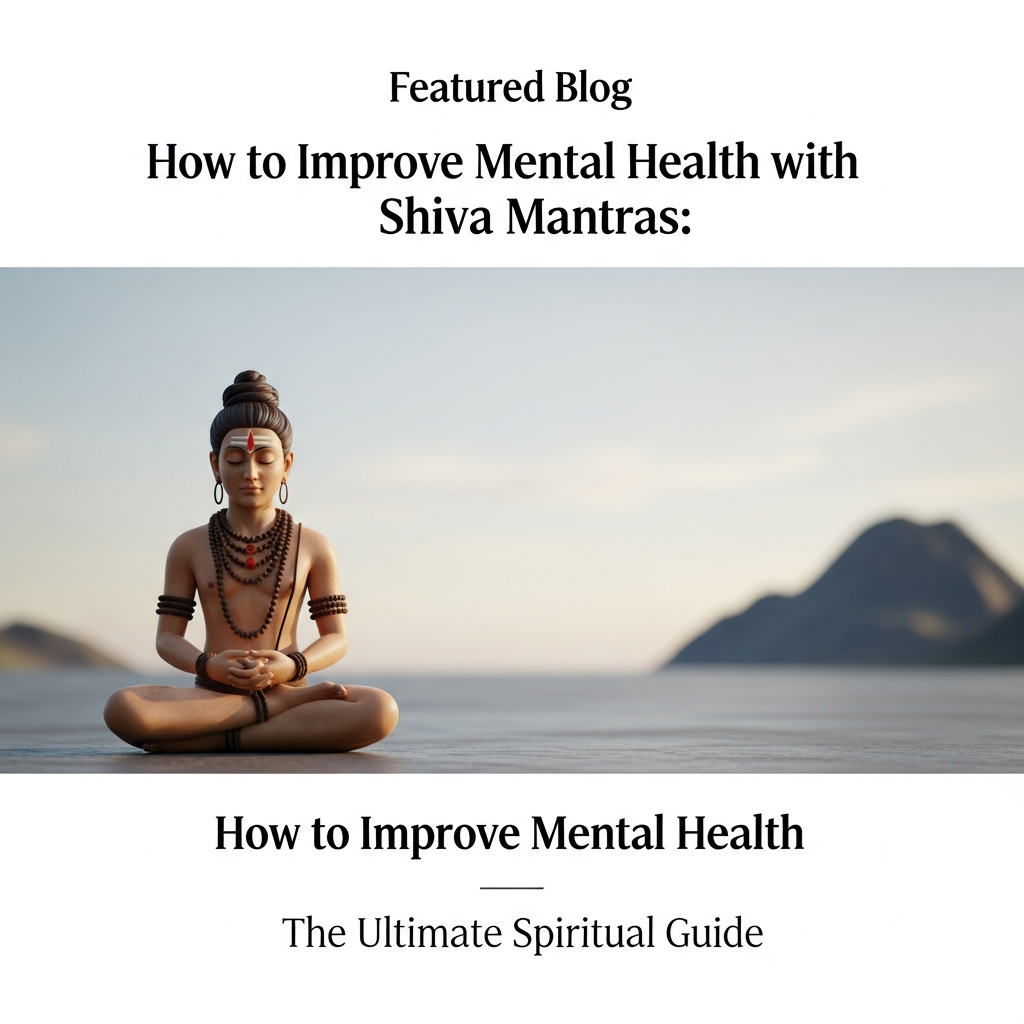
Lord Shiva, in the yogic tradition, is known as the Adiyogi—the first yogi—and the personification of pure consciousness. He represents the silence from which all sound emerges and the stillness into which all movement dissolves. When we chant Shiva mantras, we are essentially tuning our internal radio to a frequency of profound stability. This article serves as a masterclass on integrating these sacred vibrations into your life to combat anxiety, depression, and cognitive clutter.
The Science of Sound: How to Improve Mental Health with Shiva Mantras through Vibration
Before we dive into the specific chants, it is crucial to understand why this works from a physiological perspective. Our brains operate on electrical impulses, and sound is a vibration that can physically alter these patterns. When you engage in repetitive chanting, you are stimulating the vagus nerve, which is the ‘command center’ of your parasympathetic nervous system. This is the system responsible for the ‘rest and digest’ response, the direct opposite of the ‘fight or flight’ mode that characterizes chronic stress.
Research in the field of neurotheology suggests that rhythmic chanting can deactivate the amygdala—the brain’s fear center—while activating the prefrontal cortex, which is responsible for focus and emotional regulation. By understanding how to improve mental health with Shiva mantras, you are essentially performing a ‘soft reset’ on your brain’s hardware. You aren’t just thinking positive thoughts; you are changing the physical vibration of your cells.
The Power of the Panchakshara: Om Namah Shivaya
The most famous mantra in the world, Om Namah Shivaya, is often called the five-syllable mantra (Panchakshara). Each syllable corresponds to one of the five elements that make up our physical and mental existence:
- Na: Earth (Stability and grounding)
- Mah: Water (Fluidity and emotional health)
- Shi: Fire (Transformation and clarity)
- Va: Air (Movement and life force)
- Ya: Ether/Space (Connection to the divine)
When you chant this mantra, you are harmonizing these elements within yourself. If you feel ‘spaced out’ or anxious, the ‘Na’ sound grounds you. If you feel stuck or lethargic, the ‘Shi’ sound ignites your inner drive. This is the core of how to improve mental health with Shiva mantras: it creates a balanced internal ecosystem where mental illness finds it difficult to thrive.
The Mahamrityunjaya Mantra: Conquering the Fear of the Unknown
Perhaps no mantra is more potent for deep-seated anxiety than the Mahamrityunjaya Mantra. Translated as the ‘Great Death-Conquering Mantra,’ it is not necessarily about physical immortality, but about the death of the ego and the liberation from the fear that haunts our psyche. Much of our mental distress stems from the fear of loss—loss of status, loss of loved ones, or loss of control. This mantra acts as a protective shield, nurturing the mind with a sense of cosmic security.
A Step-by-Step Daily Routine: How to Improve Mental Health with Shiva Mantras Every Morning
Consistency is the secret ingredient. You cannot expect a single session to undo years of stress. To truly see results in your mental well-being, you must integrate these practices into a ritual. Here is a blueprint for a daily practice:
- The Sacred Window: Try to practice during Brahma Muhurta (the time before sunrise, roughly 4:00 AM to 6:00 AM). The atmosphere is quiet, and the collective mind of the world is still asleep, making it easier to go deep.
- Set Your Intention (Sankalpa): Sit comfortably with your spine erect. Take three deep breaths. State clearly to yourself: “I am chanting to bring peace and clarity to my mind.”
- The Chanting Process: Use a Rudraksha mala (108 beads) if possible. The act of moving the beads provides a tactile grounding point, keeping your mind from wandering.
- The Silence After: This is the most important part. After finishing 108 repetitions, do not jump up immediately. Sit in total silence for five minutes. This is when the mantra’s vibrations settle into your nervous system.
Overcoming the ‘Monkey Mind’ During Practice
One of the biggest hurdles people face when trying to improve mental health with Shiva mantras is the frustration that their mind won’t stop racing. You sit down to chant for peace, but instead, you start thinking about your taxes or a conversation you had three years ago. If this happens, do not judge yourself. Lord Shiva is the master of the mind because he witnesses everything without judgment. When a thought arises, acknowledge it, and gently bring your focus back to the sound of the mantra. The ‘muscle’ of mental health is built in that specific moment when you choose the mantra over the distraction.
The Psychosomatic Benefits of Shiva Mantras
The benefits of this practice extend far beyond just ‘feeling calm.’ When we look at the long-term effects on mental health, we see several key shifts:
- Reduction in Cortisol: Chronic high cortisol levels destroy the brain’s hippocampus, leading to memory loss and depression. Regular chanting has been shown to significantly lower these levels.
- Enhanced Neuroplasticity: Chanting creates new neural pathways. By replacing repetitive negative thought loops with the repetitive sound of a mantra, you are physically rewiring your brain for resilience.
- Improved Sleep Quality: Many practitioners find that chanting ‘Om Namah Shivaya’ before bed cures insomnia. By calming the nervous system, you transition into deep REM sleep more easily.
- Emotional Release: Sometimes, chanting can bring up tears or repressed emotions. In the context of how to improve mental health with Shiva mantras, this is a cleansing process (catharsis). Shiva is the destroyer of what no longer serves you; let those old emotions be destroyed so new peace can grow.
Integrating Mantras into a Busy Modern Life
You don’t need to be a monk in a cave to benefit from this. In fact, the people who need Shiva mantras the most are those living in the heart of the chaos. You can practice ‘Micro-Mantras’ throughout your day:
- In Traffic: Instead of getting angry at the car in front of you, chant ‘Om Namah Shivaya‘ under your breath. Turn your car into a mobile temple.
- Before Meetings: If you feel public speaking anxiety, take 30 seconds to mentally chant the mantra. It centers your energy and clears your throat chakra.
- During Exercise: Syncing the mantra with your breath while walking or running creates a state of ‘flow’ that doubles the mental health benefits of the physical activity.
Read More ↘️
Best Time to Chant Om Namah Shivaya USA: (108) Finding Your Sacred Window in a Busy World
Conclusion: Your Journey to an Unshakable Mind
Understanding how to improve mental health with Shiva mantras is an invitation to reclaim your power. We often look for external solutions to internal problems, forgetting that the most potent pharmacy is located within our own consciousness. By using these ancient sounds, you are tapping into a reservoir of peace that has existed for millennia. It is not a quick fix, but a path of transformation. As you continue your practice, you will find that while the world around you may remain chaotic, the world within you becomes an unshakeable sanctuary of Shiva—silent, powerful, and profoundly at peace.
Frequently Asked Questions
Do I need to be Hindu to chant Shiva mantras?
No. While these mantras originate from Hindu traditions, sound and vibration are universal. Just as gravity works for everyone regardless of their beliefs, the vibrational frequency of a mantra affects the human nervous system regardless of religious affiliation.
How long does it take to see results in mental health?
Most people feel an immediate sense of calm after a single session. However, for significant changes in anxiety or depression, a consistent daily practice of 21 to 40 days is usually required to ‘reset’ the brain’s default mode network.
What is the best Shiva mantra for anxiety?
The ‘Om Namah Shivaya’ mantra is excellent for general anxiety as it balances the five elements. For deep, paralyzing fear or panic attacks, the ‘Mahamrityunjaya Mantra’ is often considered more effective due to its protective and grounding nature.
Is pronunciation important?
While correct Sanskrit pronunciation (Varnashrama) is ideal for maximum vibrational impact, your intention (Bhava) is even more important. If you chant with a sincere heart and a focused mind, the benefits will manifest even if your accent isn’t perfect.
Can I chant Shiva mantras during my menstrual cycle?
Traditional views vary, but from a purely mental health perspective, many modern teachers encourage chanting at any time. The mind does not stop needing peace, and many women find the practice especially helpful for managing hormonal mood swings and physical discomfort.
1 thought on “How to Improve Mental Health with Shiva Mantras: The Ultimate Guide to Spiritual Healing”