

In a world that refuses to stop spinning, the search for true silence often feels like a desperate hunt. We spend our days tethered to screens and our nights tethered to our anxieties. If you have ever lain awake at 3 AM, your mind a whirlwind of to-do lists and past regrets, you know that sleep isn’t just a biological necessity—it’s a sanctuary we’ve forgotten how to enter. This is where calming meditation for sleep inspired by Shiva offers a profound, ancient solution.
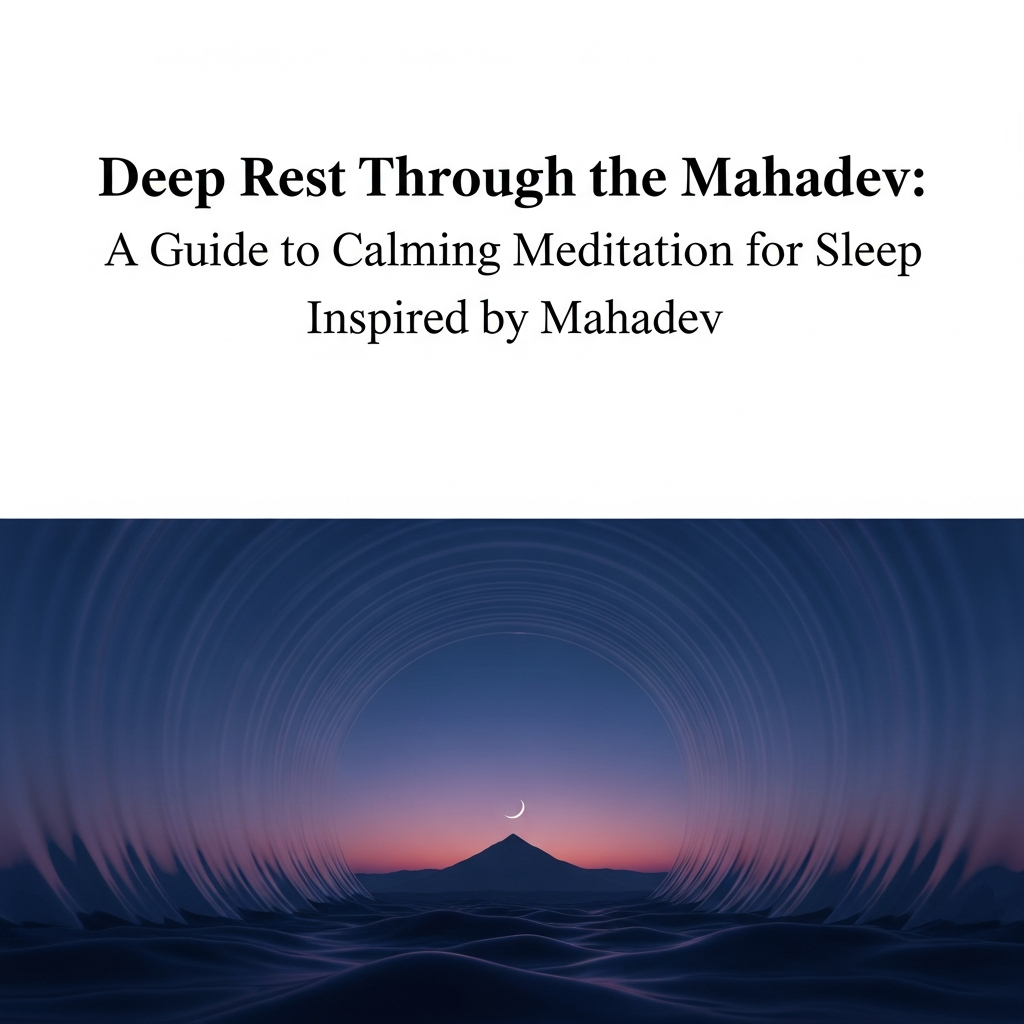
Shiva, the Adiyogi, represents the ultimate state of stillness. He is the master of the void, the one who exists in the ‘Shunya’ (the nothingness) from which all creation arises. By tapping into his energy, we don’t just ‘fall’ asleep; we consciously descend into a state of restorative bliss.
The Archetype of Stillness: Why Shiva?
Why look to Lord Shiva for sleep? In the Yogic tradition, Shiva is often depicted in deep, unshakeable meditation. While the world around him dances in the chaotic rhythm of Prakriti (nature), he remains the Purusha—the witness, the silent observer. When we struggle with insomnia, we are caught in the ‘dance’ of the mind.
A calming meditation for sleep inspired by Shiva teaches us to move from the dancer to the witness. It is about dissolving the ego-mind that keeps us awake and surrendering to the vast, cool darkness that Shiva embodies. He is often associated with the moon (Chandra), which sits on his brow, cooling the heat of the world. This lunar energy is exactly what a restless mind needs to transition from the ‘solar’ heat of day-to-day productivity to the ‘lunar’ coolness of night-time recovery.
The Science of Surrender: Sleep Meets Spirituality
From a modern physiological perspective, the struggle to sleep is often a failure of the nervous system to transition from the sympathetic (fight or flight) to the parasympathetic (rest and digest) state. Shiva-inspired meditation acts as a manual override for this system. By focusing on specific visualizations associated with the Mahadev—such as the steady flow of the Ganges or the rhythmic sound of the Damaru—we signal to our brain that the ‘hunt’ is over. There are no tigers to run from; there is only the mountain, and we are the mountain. This practice isn’t just spiritual fluff; it is a deep-tissue massage for the psyche, lowering cortisol levels and preparing the pineal gland to release melatonin in its purest form.
The Core Practice: A Step-by-Step Shiva Sleep Meditation
To perform a calming meditation for sleep inspired by Shiva, you do not need to be a yogi or a scholar. You simply need the willingness to let go. Follow these steps as you lie in bed, ready to transition into the night.
1. The Asana of Abandonment
Lie flat on your back in Shavasana (Corpse Pose). This is the pose of total surrender. Let your feet fall to the sides. Your palms should face upward, open to the universe. In this position, you are mimicking the stillness of Shiva at the end of a cosmic cycle. Close your eyes and feel the weight of your body pressing into the mattress. Recognize that the earth is holding you, and for the next few hours, you have no responsibilities to the material world.
2. The Breath of the Blue Throat (Neelkanth)
Lord Shiva is called Neelkanth because he swallowed the poison of the world to save humanity. In your meditation, your ‘breath’ is the vehicle that processes your daily ‘poison’—the stress, the anger, and the noise. Inhale slowly for a count of four, imagining a cool, blue light entering your throat. Hold for two seconds. Exhale for a count of six, imagining all the gray, murky tension leaving your body. As you breathe, realize that you are not your thoughts; you are the space in which the thoughts occur.
3. The Lunar Visualization (Soma)
Focus your internal gaze on the space between your eyebrows—the Third Eye. Visualize a silver crescent moon resting there. This moon radiates a soft, cooling light that begins at your forehead and washes down over your face, neck, and chest. Every time a stray thought enters your mind, see it as a cloud passing in front of this moon. Do not fight the cloud; just watch it drift away until the silver light is clear again. This is the essence of a calming meditation for sleep inspired by Shiva.
4. The Rhythmic Mantra: Om Namah Shivaya
If your mind is particularly loud, use the mantra ‘Om Namah Shivaya’. Mentally chant it in sync with your breath. ‘Om’ (The sound of the universe), ‘Namah’ (I bow), ‘Shivaya’ (To the inner self/Shiva). This mantra acts as a sonic shield, blocking out the static of the day and tuning your vibration to the frequency of deep peace.
Symbolism to Carry Into the Dream State
Understanding the symbols of Shiva can deepen the effectiveness of your meditation. Here are three key elements to focus on:
- The Ashes (Vibhuti): Shiva is smeared with ashes, representing the transient nature of life. As you sleep, imagine your worries turning to ash. They have no substance; they cannot hurt you in the realm of rest.
- The Ganges: Visualize a steady, crystalline stream of water flowing from the crown of your head down through your spine. This represents the flow of consciousness, washing away the ‘dust’ of the day’s interactions.
- The Trishula (Trident): This represents the three states of consciousness—Waking, Dreaming, and Deep Sleep. Visualize the trident standing firm, signifying that you are protected in all three states.
Mastering the Environment for Shiva-Inspired Rest
A calming meditation for sleep inspired by Shiva is most effective when your environment reflects the ‘Kailash’ (the sacred mountain) within. To optimize your space, consider these elements:
- Scent: Use sandalwood or frankincense. These earthy, grounding scents are traditionally associated with meditative states and help anchor the mind.
- Temperature: Keep the room cool. Just as Shiva dwells in the cold peaks of the Himalayas, the body requires a drop in core temperature to initiate deep sleep.
- Silence: If you cannot have absolute silence, use a low-frequency brown noise or a recording of Vedic chants played at a very low volume.
The Benefits of Regular Practice
Consistency is the ‘Tapas’ (discipline) of meditation. If you practice this calming meditation for sleep inspired by Shiva nightly, you will begin to notice changes beyond just better sleep:
- Increased Emotional Resilience: Like the ‘Witness’ Shiva, you will find yourself less reactive to daily stressors.
- Mental Clarity: Morning ‘brain fog’ often dissipates when sleep is rooted in deep spiritual stillness.
- Physical Healing: Deep sleep is when the body repairs tissue and regulates hormones. By entering sleep through meditation, you improve the quality of this physical restoration.
Read more ↘️
Best Time to Chant Om Namah Shivaya USA: (108) Finding Your Sacred Window in a Busy World
Frequently Asked Questions
Is this meditation religious?
While it draws from Hindu iconography, the practice is phenomenological. Shiva represents universal principles of stillness and transformation. Anyone, regardless of their faith, can benefit from the archetypal power of these visualizations to calm the nervous system.
How long does it take to work?
For many, the cooling effect is immediate. However, for chronic insomniacs, it may take 7 to 10 days of consistent practice for the brain to fully associate these visualizations with the ‘shutdown’ command.
Can I use a guided track?
Yes. If you find it hard to hold the visualizations alone, searching for a ‘Yoga Nidra’ or ‘Shiva Sleep Meditation’ guided track can provide a helpful scaffold until you are comfortable practicing in silence.
What if I fall asleep mid-meditation?
That is the goal! Unlike sitting meditation where you strive for alertness, sleep meditation is a success the moment you lose conscious awareness. Shiva welcomes you into the void of sleep.
Conclusion: Surrendering to the Great Silence
The beauty of calming meditation for sleep inspired by Shiva lies in its ultimate simplicity. It asks nothing of you except that you stop trying. In a society that rewards ‘doing,’ Shiva rewards ‘being.’ By visualizing the moon, the cool water, and the vast stillness of the mountain, you align yourself with a rhythm that is far older than your current anxieties.
Tonight, as you lay your head down, do not just close your eyes. Instead, offer your day, your worries, and your very self into the hands of the Mahadev. Become the mountain. Become the silence. And in that silence, find the most profound rest you have ever known. Om Shanti, Shanti, Shanti.