

Shiva Meditation Technique for Beginners: Your Path to Cosmic Stillness
Close your eyes for a moment. Feel the hum of the world around you—the traffic, the notifications, the endless chatter of the mind. Now, imagine a silence so profound it contains the echo of creation itself. Imagine a stillness so powerful it is the very source of all movement. This is the energy of Shiva, the Adi Yogi, the first Guru, the unmanifest consciousness from which everything arises.
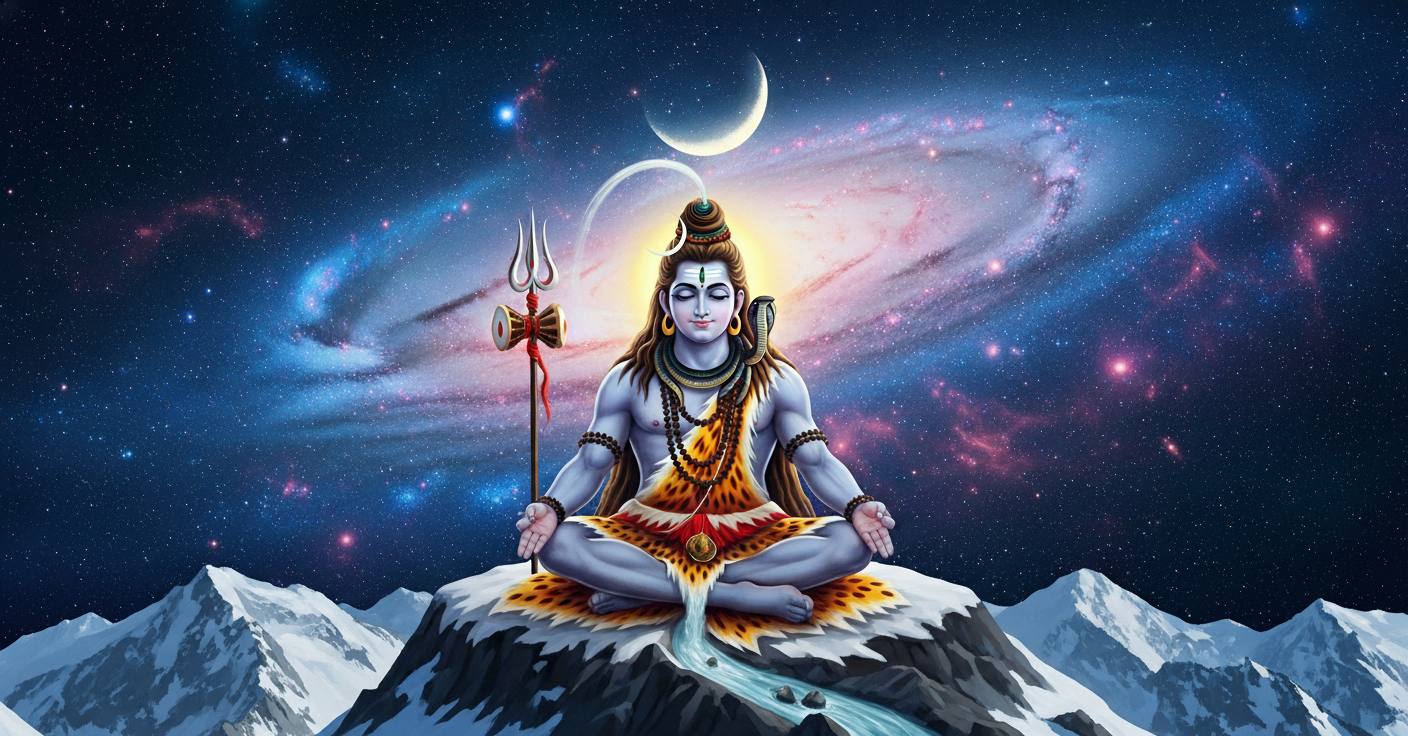
In the heart of the snow-capped Himalayas, He sits. Not as a distant god on a throne, but as the very potential that lies dormant within you. His energy is not something to be worshipped from afar; it is a living, breathing force to be realized within. For those of us navigating the complexities of modern life in the USA and across the globe, this connection is not just a spiritual luxury—it’s a necessity. This guide is your doorway. We will explore a simple yet profound Shiva meditation technique for beginners, delve into the vibrational science of His mantras, and understand how to bring this timeless wisdom into your daily life for unshakable peace and clarity.
The Vibrational Keys to Consciousness: Unlocking Shiva’s Mantras
Mantras are not mere words or prayers. They are cosmic sounds, vibrational formulas that restructure our inner world. When you chant a mantra, you are aligning your personal energy field with the universal energy it represents. It’s like tuning a guitar; the mantra tunes your consciousness to the frequency of the divine.
1. Om Namah Shivaya: The Panchakshara Mantra of Surrender
This is perhaps the most beloved and powerful mantra in all of Shaivism. It’s called the ‘Panchakshara’ or five-syllable mantra (excluding the ‘Om’).
* Meaning: In its simplest form, it means ‘I bow to Shiva’. But its essence is far deeper. ‘Na’ represents the earth element, ‘Ma’ is water, ‘Shi’ is fire, ‘Va’ is air, and ‘Ya’ is ether. Chanting this mantra is a process of harmonizing the five elements within your own body, acknowledging that the microcosm of ‘you’ is a reflection of the macrocosm of the universe. It is a profound act of surrender, letting go of the ego and acknowledging a higher consciousness.
* Benefits: Regular chanting of ‘Om Namah Shivaya’ purifies the mind, calms turbulent emotions, and builds a powerful shield of positive energy around you. It dissolves stress, anxiety, and fear, replacing them with a sense of deep, abiding peace. It is the key that opens the heart to divine love.
* How to Chant: Find a quiet space. Sit comfortably with your spine erect. You can close your eyes and focus on the space between your eyebrows. Begin chanting, either aloud or silently. Feel the vibration of each syllable resonating through your body. You can use a ‘rudraksha mala’ (a string of 108 beads) to keep count. The key is not mechanical repetition, but chanting with feeling, with devotion. Let the sound wash over you.
2. Mahamrityunjaya Mantra: The Great Mantra for Healing and Liberation
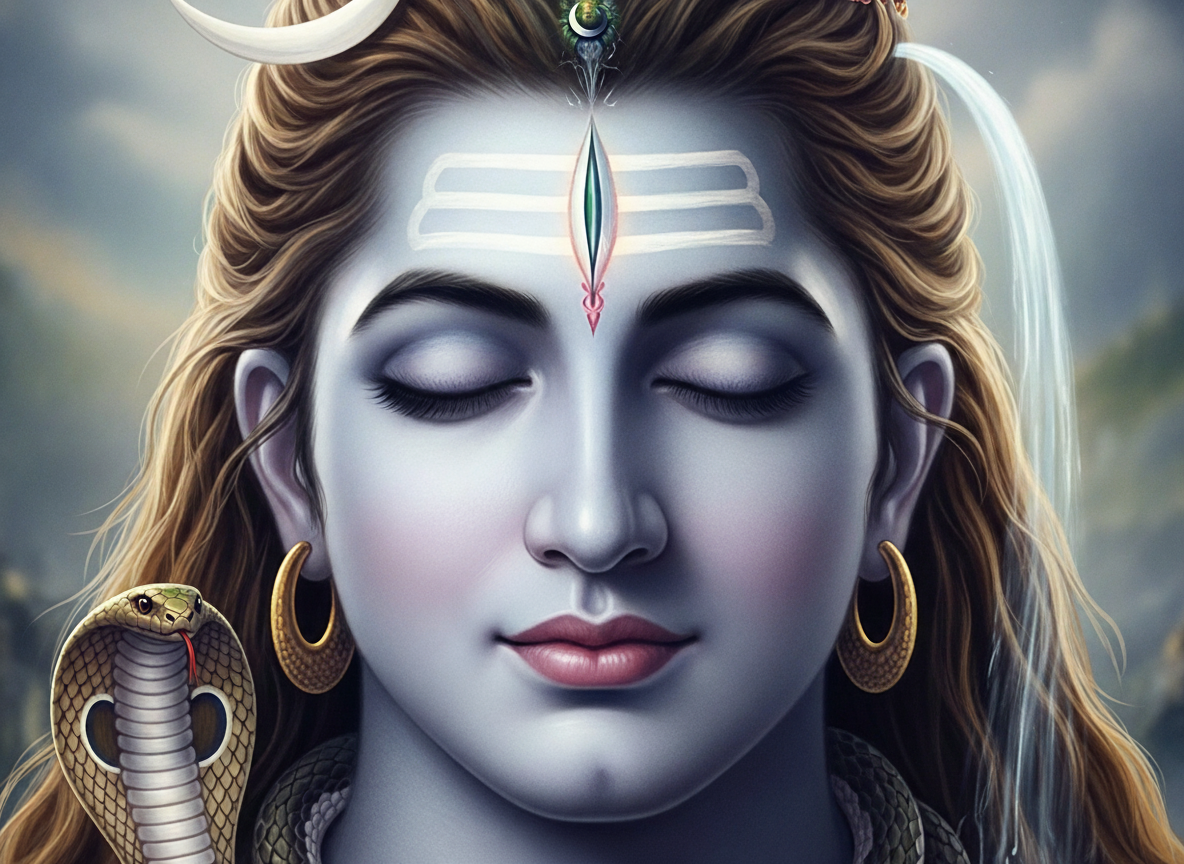
This is one of the most ancient and potent mantras from the Rig Veda. It is a prayer to Tryambakam, the ‘three-eyed one’, an epithet of Shiva, for spiritual and physical well-being.
**’Om Tryambakam Yajamahe Sugandhim Pushtivardhanam
Urvarukamiva Bandhanan Mrityor Mukshiya Ma’amritat’**
* Meaning: ‘We worship the three-eyed one (Lord Shiva) who is fragrant and who nourishes all beings. May he liberate us from death for the sake of immortality, even as the cucumber is severed from its bondage to the creeper.’
* Benefits: This mantra is a spiritual panacea. It is chanted for healing from physical and mental ailments, for protection from negativity, and for overcoming the fear of death. It bestows longevity, peace, and ultimately, ‘moksha’ (liberation). Chanting it reminds us that our true nature is immortal, beyond the confines of the physical body.
* When to Chant: The pre-dawn hours, known as ‘Brahma Muhurta’, are considered most powerful for this mantra. However, chanting it with sincerity at any time, especially when you feel fearful or unwell, can bring immense comfort and strength.
3. Rudra Gayatri Mantra: For Divine Protection and Intellect
This mantra invokes the fierce yet compassionate form of Shiva, known as Rudra, to dispel darkness and awaken higher intelligence.
**’Om Tatpurushaya Vidmahe Mahadevaya Dhimahi
Tanno Rudrah Prachodayat’**
* Meaning: ‘Om. Let me meditate on the great Purusha, Oh, greatest God, give me higher intellect, and let Lord Rudra illuminate my mind.’
* Benefits: This mantra is a powerful tool for students and anyone seeking clarity of thought. It sharpens the intellect, dispels ignorance, and provides a powerful shield of divine protection against all harm. It helps in overcoming anger and aggression, channeling that energy into focused, productive action.
Your Step-by-Step Guide: The Shiva Meditation Technique for Beginners (Shiva Dhyana)
Meditation is the art of being with yourself. The goal isn’t to empty the mind, but to become the silent observer of its activities. This Shiva Dhyana is a simple way to connect with His formless, peaceful energy.
Step 1: Create Your Sacred Space
Find a quiet corner where you won’t be disturbed for 15-20 minutes. It doesn’t have to be elaborate. A clean, uncluttered space is enough. You may light a lamp or a stick of incense if it helps you feel centered. Sit comfortably on a cushion or chair, ensuring your spine is straight but not stiff.
Step 2: The Grounding Breath
Close your eyes gently. Take three deep, conscious breaths. Inhale slowly through your nose, filling your belly. Hold for a moment. Exhale slowly through your mouth, releasing all the tension from your day. With each exhale, feel yourself becoming more present, more grounded in this moment.
Step 3: The Inner Chant
Now, begin to chant ‘Om Namah Shivaya’ silently within your mind. Don’t force it. Let it be a gentle, rhythmic pulse. Sync the mantra with your breath if it feels natural. For example, mentally chant ‘Om Namah’ as you inhale, and ‘Shivaya’ as you exhale. This gives your restless mind a single, sacred point of focus.
Step 4: Visualization of Stillness
As the mantra flows, bring a gentle image to your mind’s eye. Imagine a vast, serene lake at the foot of a majestic, snow-covered mountain, perhaps Mount Kailash. The water is perfectly still, reflecting the infinite blue sky. This stillness is Shiva. Your mind is this lake. Thoughts may arise like ripples, but you are not the ripples. You are the deep, silent water beneath. Simply observe the thoughts without judgment and let them pass, always returning your focus to the silent chant.
Step 5: Abiding in the Silence
After 10-15 minutes, let go of the chant. Let go of the visualization. For the last few minutes, simply sit in the stillness you have created. Feel the peace. Feel the spaciousness within you. This is the essence of Shiva consciousness—pure, silent, awareness.
Step 6: Gentle Return
Slowly become aware of your body, the room around you. Gently wiggle your fingers and toes. When you are ready, slowly open your eyes. Carry this feeling of peace with you into your day.
Divine Forms: Visualizing the Infinite for Your Meditation and Wallpapers
For the human mind, form provides a gateway to the formless. Visualizing Shiva’s divine forms can be a powerful aid in meditation and a source of constant inspiration. When you search for ‘Lord Shiva HD Wallpapers’, you are seeking a visual anchor for your devotion.
* The Meditating Yogi (Dhyana Mudra): Picture this on your screen—Shiva, seated in the perfect lotus posture atop Mount Kailash. His eyes are closed, a gentle, blissful smile on his face. The mighty river Ganga flows from his matted locks, symbolizing the eternal flow of consciousness. The crescent moon on his head represents mastery over the mind and time. A serpent, representing dormant kundalini energy, rests peacefully around his neck. This image is the ultimate symbol of inner peace and unshakable tranquility. It reminds you that the greatest power is found not in action, but in profound stillness.
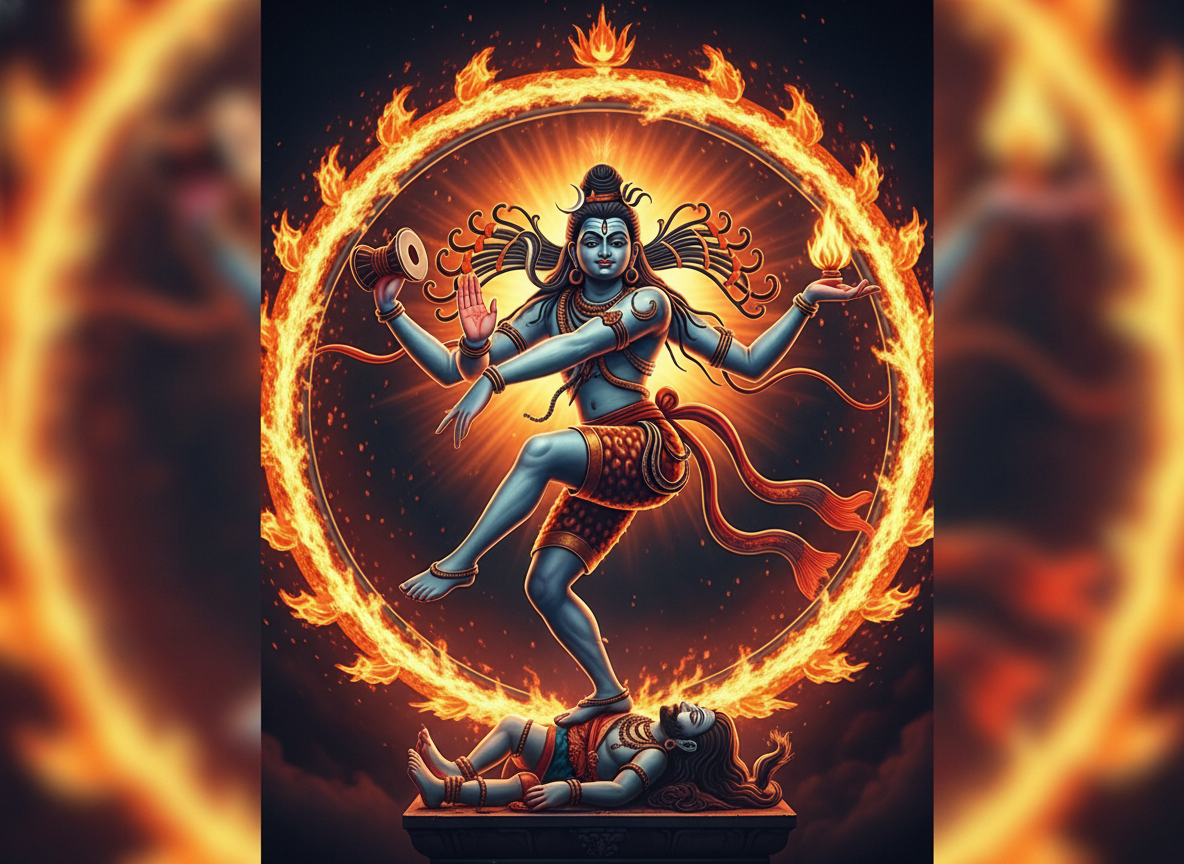
* Nataraja, The Cosmic Dancer: Imagine a dynamic wallpaper of Shiva as Nataraja, dancing within a ring of cosmic flames. One foot crushes a demon, representing the ego and ignorance. His four arms hold a ‘damru’ (drum) creating the universe, and a flame, dissolving it. His other hands are in gestures of ‘fear not’ and liberation. This is the image of dynamic energy, creation, and transformation. It teaches us that life is a cosmic dance of rhythm and change, and true freedom lies in dancing with it without attachment.
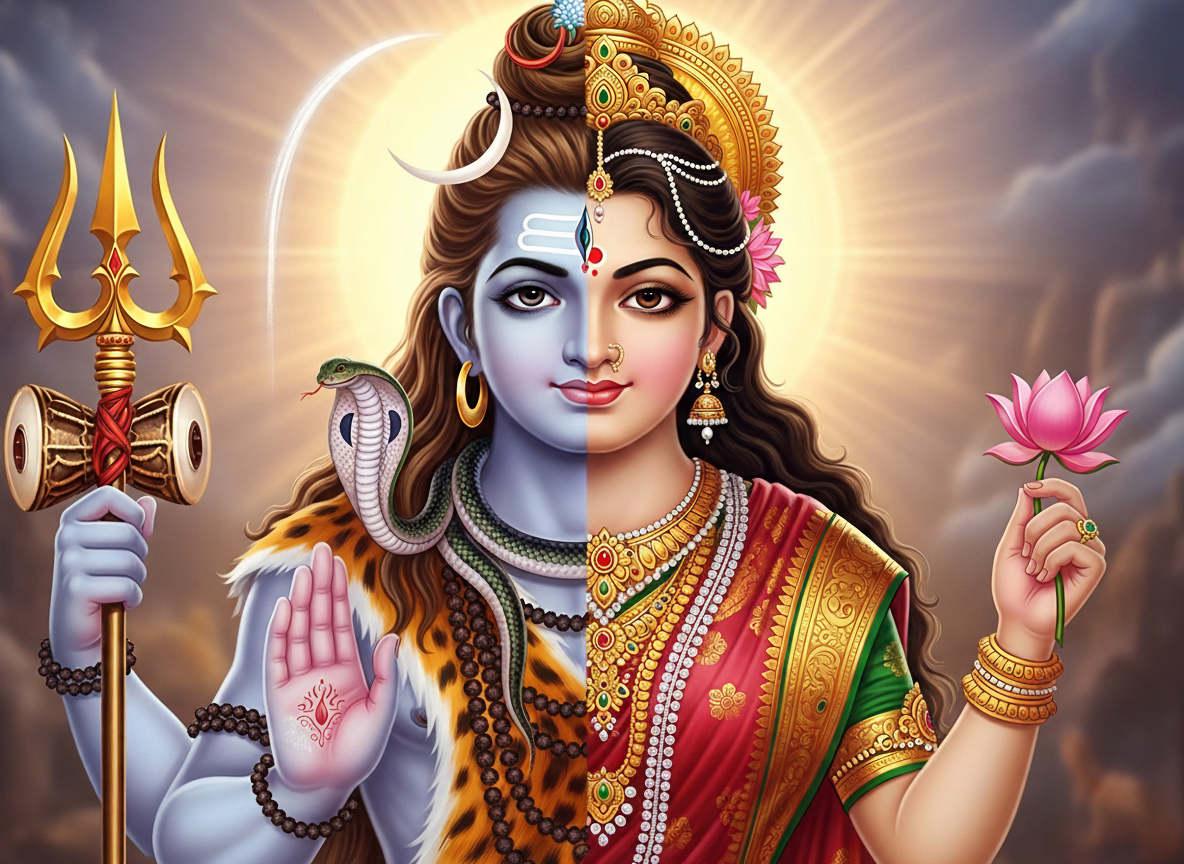
* Ardhanarishvara, The Union of Opposites: Visualize the profound form where one half is the masculine Shiva and the other half is the feminine Parvati. It is a stunning representation that the ultimate reality is a perfect union of masculine and feminine energies, of consciousness and power, of being and becoming. This form is a powerful reminder of balance and wholeness. It teaches us that spiritual growth lies in integrating all aspects of ourselves.
From the Himalayas to Your Heart: Shiva for Modern Wellness
How does an ancient deity relate to our 21st-century lives filled with deadlines, digital overload, and anxiety? The answer is: profoundly.
* Stress Reduction: The constant mental chatter of ‘what ifs’ and ‘should haves’ is the root of modern stress. The Shiva meditation technique for beginners acts as a circuit breaker. By focusing on the mantra and breath, you give the analytical mind a rest, activating your body’s natural relaxation response. You are not fighting your thoughts; you are simply shifting your attention to a deeper, calmer reality.
* Emotional Resilience: Shiva is the ultimate master of emotions. He is ‘Bholenath’ (the innocent one) but also the ‘Rudra’ (the fierce one). He contains all polarities. Worshipping Him teaches us to accept and integrate our own emotional spectrum. You learn that it’s okay to feel anger or sadness, but you don’t have to be consumed by it. You develop the inner stability to observe emotions without being swept away by them.
* Finding Your Purpose (Dharma): Shiva as the Adi Yogi represents the power of turning inward to find answers. In a world that constantly tells you who you *should* be, Shiva’s energy encourages you to discover who you *are*. Meditation and chanting quiet the external noise, allowing the subtle voice of your own inner wisdom, your ‘dharma’, to emerge.
Embrace the Stillness Within
Lord Shiva is not a figure confined to ancient texts or temple walls. He is the potential for infinite peace that resides in the core of your being. He is the silence between your thoughts, the stillness beneath the chaos of life. He is the destroyer of ego, fear, and limitation, and the creator of strength, clarity, and boundless love.
By embracing the simple yet powerful tools of mantra and meditation, you are not just performing a ritual. You are embarking on the most sacred journey there is: the journey back to your own divine self. Start today. Use the Shiva meditation technique for beginners as your guide. Let the vibration of ‘Om Namah Shivaya’ become the soundtrack to your life. Allow the stillness of the Adi Yogi to become your greatest strength. The peace you seek is not in the mountains of the Himalayas; it is waiting patiently within you.
Om Namah Shivaya.
Read More ↘️
The Executive Edge: Why Luxury Meditation Retreats Are the Ultimate ROI