

Lord Shiva Third Eye Activation Meditation Guide: A Journey to Cosmic Consciousness
Close your eyes for a moment. Feel the hum of the universe within your own chest. Beyond the noise of daily life, beyond the endless chatter of the mind, there exists a profound stillness, a silent, powerful presence. This is the realm of Shiva. He is not just a deity in a distant heaven; He is the very source of consciousness, the Adi Yogi (the first Yogi), the ultimate ascetic dwelling in the snow-capped peaks of your own awareness.
For seekers in the USA and across the globe, connecting with this energy is more than a religious practice; it’s a path to profound mental clarity and spiritual wellness. This Lord Shiva third eye activation meditation guide is your map to that sacred inner landscape.
We live in a world that constantly pulls us outward. Our senses are bombarded, our minds are overstimulated, and our spirits often feel depleted. The ancient wisdom of Shaivism offers a timeless antidote: turning inward. It teaches us that the power to dissolve negativity, overcome obstacles, and experience boundless peace lies dormant within us. Through the vibration of mantras, the focus of meditation, and the inspiration of His divine forms, we can awaken this power.
The Sacred Vibration: Unlocking Power with Shiva Mantras
A mantra is not mere chanting; it is a sacred sound formula, a key that unlocks specific energies within the cosmos and within you. When you chant a mantra, you are aligning your personal vibration with the universal vibration. The very cells of your body begin to resonate with divine energy. Let’s explore some of the most potent mantras dedicated to Lord Shiva.
1. The Panchakshari Mantra: Om Namah Shivaya (ॐ नमः शिवाय)
This is perhaps the most famous and powerful mantra in all of Shaivism. It’s called the ‘Panchakshari’ mantra, meaning it has five sacred syllables (Na-Ma-Shi-Va-Ya), preceded by the cosmic sound ‘Om’.
* Meaning: In its simplest form, it means ‘I bow to Shiva’. But the depth is immense. It signifies surrendering the individual ego (the ‘I’) to the Supreme Consciousness (Shiva). The five syllables also represent the five elements: Earth (Na), Water (Ma), Fire (Shi), Air (Va), and Ether (Ya).
* Why We Chant It: Chanting ‘Om Namah Shivaya’ purifies the five elements within our system. It calms the mind, reduces stress and anxiety, and builds a protective shield of positive energy around you. It’s a spiritual detox. It stills the restless ‘monkey mind’ and brings you into the present moment, the only place where peace exists.
* How to Chant: Find a quiet space. Sit comfortably with your spine erect. You can chant it aloud, whisper it, or repeat it silently in your mind. The traditional practice involves a *japa mala* (a string of 108 beads) to keep count. With each bead, you repeat the mantra. Let the vibration fill you. Don’t just say the words; *feel* them.
2. The Mahamrityunjaya Mantra: The Great Victory Over Death
This is one of the most profound mantras from the Rig Veda. It is a healing mantra, a prayer for protection, and a path to liberation.
ॐ त्र्यम्बकं यजामहे सुगन्धिं पुष्टिवर्धनम् ।
उर्वारुकमिव बन्धनान् मृत्योर्मुक्षीय मामृतात् ॥
*Om Tryambakam Yajamahe Sugandhim Pushtivardhanam,*
*Urvarukamiva Bandhanan Mrityor Mukshiya Ma’mritat.*
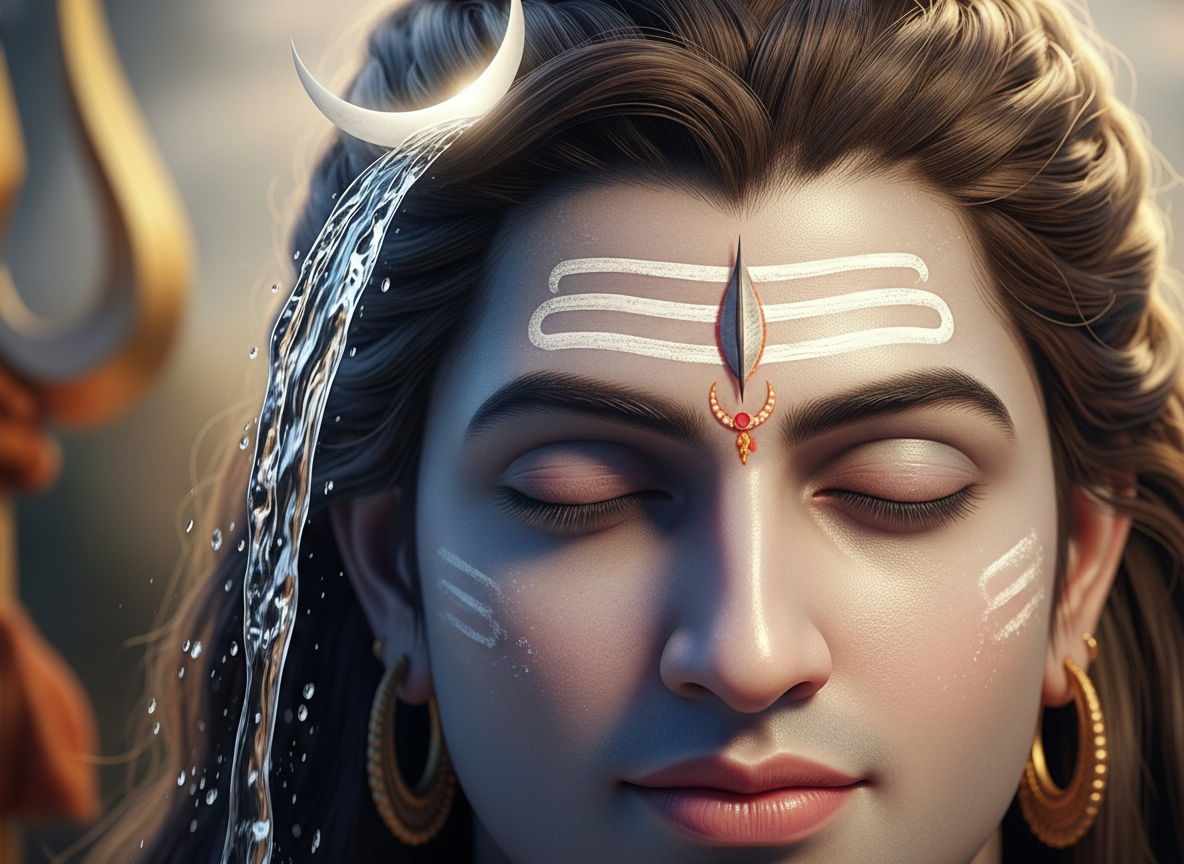
* Meaning: ‘We worship the Three-Eyed One (Lord Shiva) who is fragrant and who nourishes all beings. May He liberate us from death for the sake of immortality, just as a cucumber is severed from its bondage to the creeper.’
* The Deeper Insight: ‘Death’ here doesn’t just mean physical death. It refers to the death of our spirit from fear, ignorance, and ego. The mantra is a plea to be liberated from the cycle of suffering and attachment. It’s a powerful tool for healing, both physically and emotionally, instilling courage and vanquishing fear.
* Benefits in Modern Life: In our high-stress lives, this mantra is a balm for the soul. It is known to reduce anxiety, promote emotional well-being, and create a deep sense of calm and security. Many devotees chant it for the health and protection of their loved ones.
Shiva Dhyana: Your Step-by-Step Meditation for Inner Peace
Meditation is the art of looking within. Shiva Dhyana is not about forcing the mind to be quiet; it’s about creating the conditions for it to become still on its own. This practice is the core of our Lord Shiva third eye activation meditation guide.
Your Third Eye, or *Ajna Chakra*, is located between your eyebrows. It is the center of intuition, foresight, and inner wisdom. Activating it doesn’t mean you’ll see visions; it means you’ll see with clarity. You’ll perceive the truth beyond the illusion of the material world.
Preparation:
1. Choose a Time & Place: Early morning, during the *Brahma Muhurta* (approx. 90 minutes before sunrise), is ideal. Find a clean, quiet, and peaceful spot where you won’t be disturbed.
2. Comfortable Posture: Sit on a cushion or mat on the floor. You can sit in *Sukhasana* (easy pose) or *Padmasana* (lotus pose). The key is to keep your spine straight but not rigid. Rest your hands on your knees with palms facing up.
3. Set an Intention: Gently close your eyes. Take a moment to set an intention. It could be as simple as ‘I want to find peace’ or ‘I connect with my inner self’.
The Meditation Process:
1. Deep Breathing (5 minutes): Begin by taking slow, deep breaths. Inhale through your nose, allowing your belly to expand. Exhale slowly through your nose, drawing your navel towards your spine. This calms the nervous system and prepares the mind for meditation.
2. Focus on the Third Eye (5-10 minutes): Gently bring your awareness to the point between your eyebrows. Don’t strain. Just rest your attention there. Imagine a gentle, pulsating light at this spot. It might be a silver-blue flame or a soft white glow. Just observe it without judgment.
3. Mantra Repetition (10 minutes): Now, begin to silently chant ‘Om Namah Shivaya’. Synchronize the mantra with your breath if it feels natural. Let the sound of ‘Om’ resonate at your third eye center. Feel the vibration spreading through your entire skull, calming every thought.
4. The Stillness (5+ minutes): After chanting, let go of the mantra. Sit in complete silence. Just be. Be the witness to your thoughts, feelings, and sensations. Don’t engage with them; just watch them float by like clouds in the sky. In this gap between thoughts, you will experience the stillness of Shiva.
5. Closing: Gently bring your awareness back to your body. Wiggle your fingers and toes. Rub your palms together to generate warmth and place them over your eyes. Slowly, with a gentle smile, open your eyes.
Consistency is key. Even 10 minutes a day can create a monumental shift in your life. This practice reduces cortisol (the stress hormone), improves focus, and fosters a deep connection with your intuitive self.
Visualizing the Divine: The Power of Shiva’s Forms & Wallpapers
For the devotee, a visual representation of the divine is a powerful anchor for the mind. When you search for ‘Lord Shiva HD Wallpapers’, you are not just looking for an image; you are seeking a focal point for your devotion, a reminder of the qualities you wish to cultivate. Each form of Shiva is a universe of symbolism.
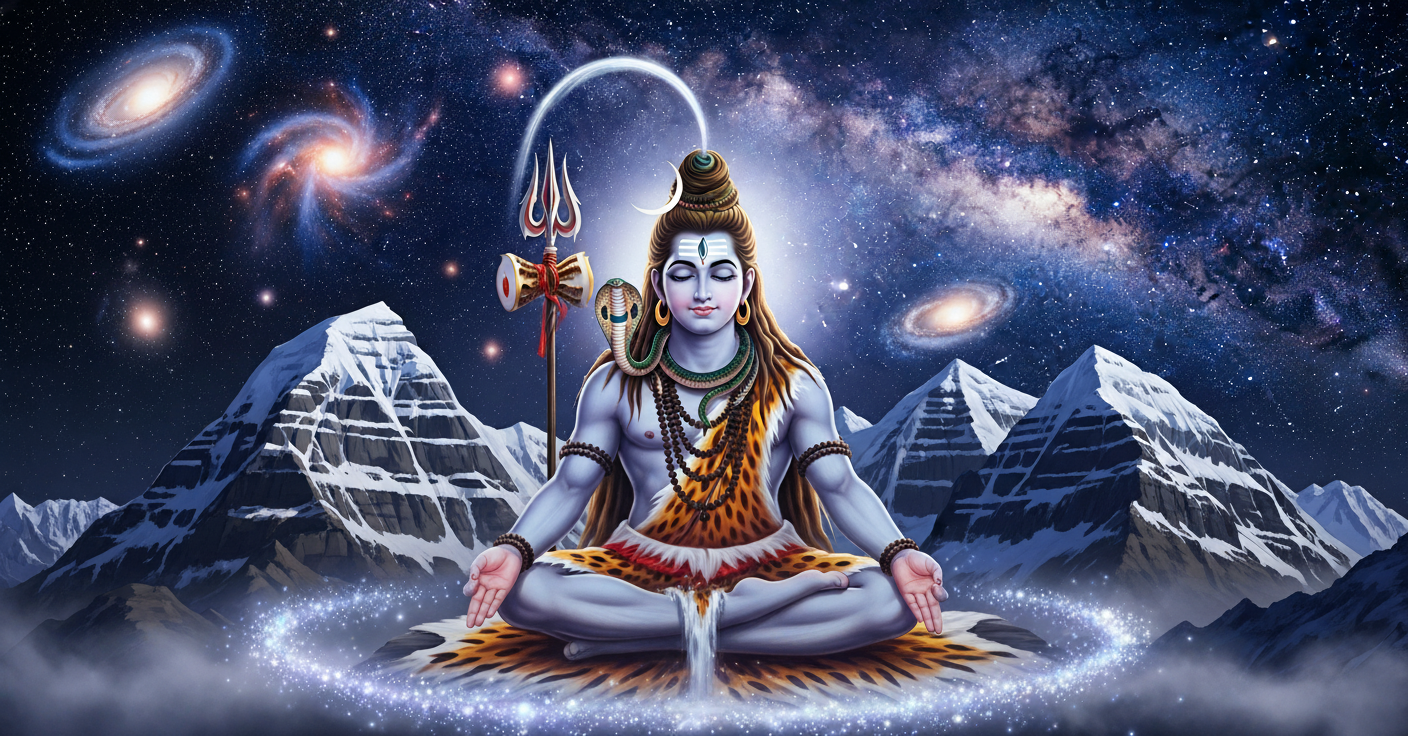
* The Meditating Ascetic (Adi Yogi): Imagine an 8K, hyper-realistic wallpaper. Shiva sits in deep meditation upon a tiger skin on Mount Kailash. The majestic, snow-covered Himalayas stretch behind him. His eyes are closed, his face a perfect picture of serene bliss and absolute stillness. A divine, golden light emanates from him, illuminating the cosmic energy swirling around.
The crescent moon on his matted locks represents the mastery over the mind’s cycles. The river Ganga, flowing from his hair, symbolizes the eternal flow of wisdom and purity that washes away ignorance. This image is a powerful reminder to find the unshakable center of peace within yourself.
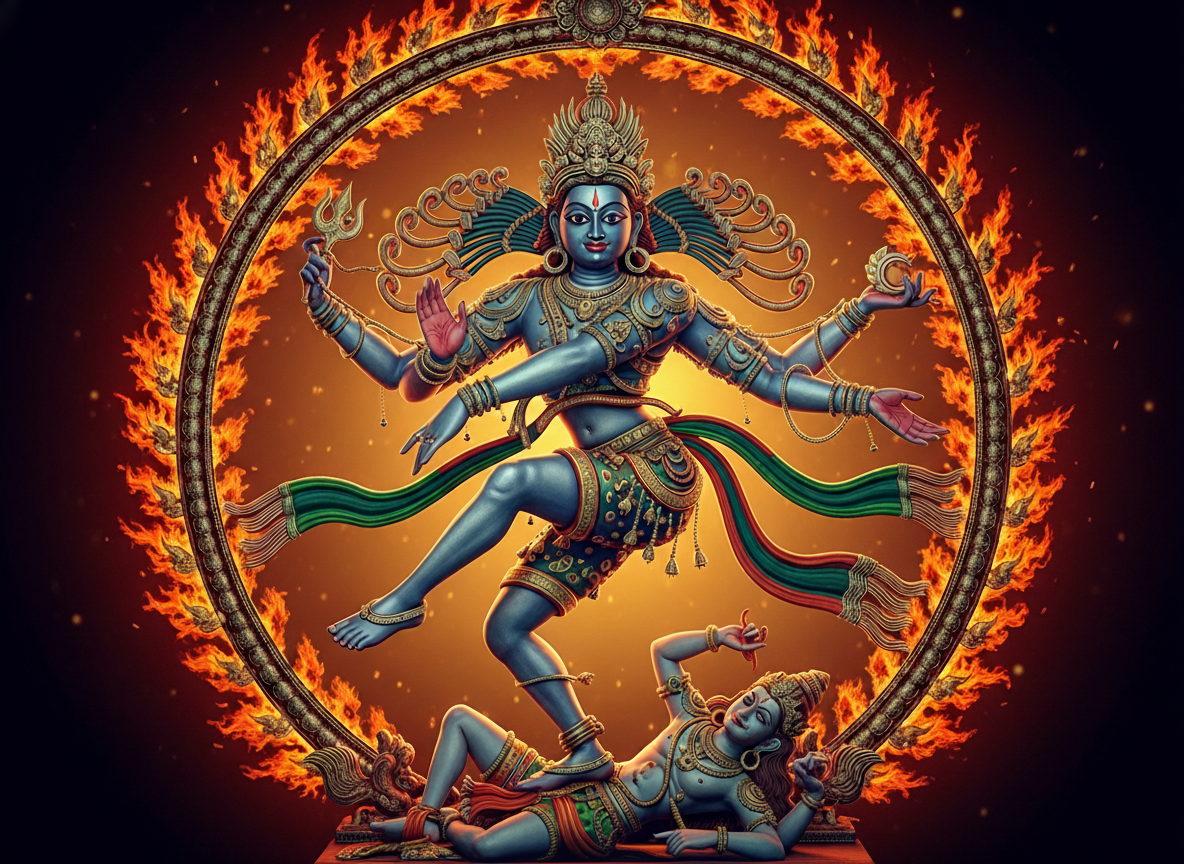
* Nataraja, The Cosmic Dancer: Picture a dynamic, high-contrast digital art piece. Shiva as Nataraja, engaged in the *Tandava*—the cosmic dance of creation and destruction. He is surrounded by a ring of fire, the energy of the universe. One foot crushes a demon, representing the destruction of ego and ignorance. His raised hand offers a gesture of fearlessness (*Abhaya Mudra*). His drum, the *damru*, beats the rhythm of creation. This form teaches us that change is the only constant. It inspires us to embrace life’s dance with courage and grace, knowing that every ending is a new beginning.
Ardhanarishvara, The Union of Opposites: Visualize a deeply symbolic painting. The right half of the body is distinctly male—Shiva, with matted locks and ash-smeared skin. The left half is female—Parvati, adorned with jewelry and a graceful expression. This form is not about being ‘half-man, half-woman’. It is the profound truth that the universe is a play of masculine (consciousness) and feminine (energy) principles. Ardhanarishvara reminds us that balance is essential for a harmonious life—the balance of logic and intuition, strength and compassion, action and rest.
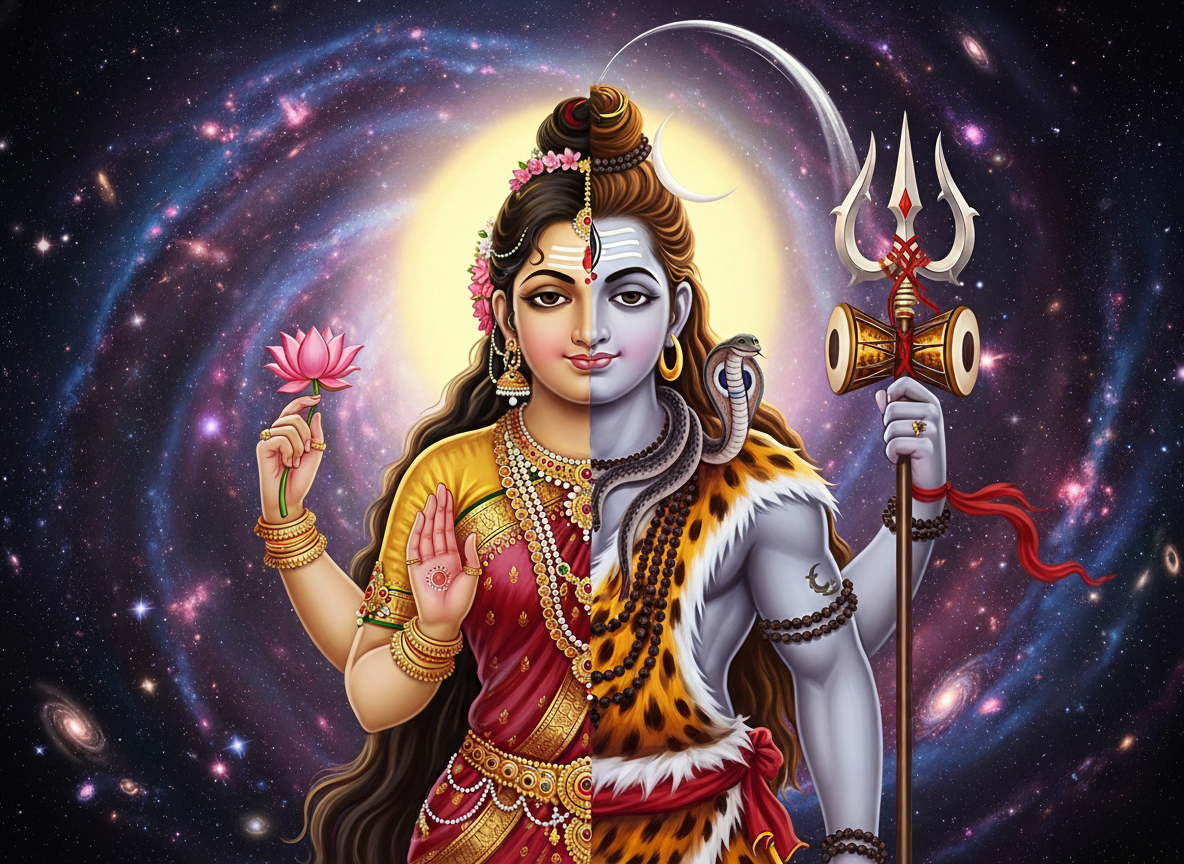
When you place such an image on your phone or laptop, it ceases to be just pixels. It becomes a darshan—a divine sighting, a constant, silent guru reminding you of your own highest potential.
Shiva Consciousness for Modern Wellness & Healing
How does connecting with an ancient deity help with modern problems like anxiety, burnout, and emotional distress? The answer is simple: Shiva is the master of transformation.
His primary tool is the Trident, the Trishula. The three prongs represent the three fundamental qualities of nature (Gunas): Tamas (inertia, darkness), Rajas (activity, passion), and Sattva (purity, harmony). Shiva wields the Trishula to destroy the negativity born from an imbalance of these qualities.
* Stress Reduction: When you chant His mantras or meditate on His form, you are essentially recalibrating your inner energies. The constant mental agitation (*Rajas*) is calmed, and the feeling of being stuck or depressed (Tamas) is pierced, allowing a state of clarity and peace (*Sattva*) to emerge.
* Emotional Healing: Shiva is also Bholenath, the innocent one, who is easily pleased. He is the ultimate non-judgmental witness. Meditating on him allows you to become a witness to your own emotions without being overwhelmed by them. You learn to let go of past hurts and future anxieties, finding healing in the present moment.
* Overcoming Fear: The snake coiled around Shiva’s neck represents the ego and fear, which he has completely mastered. By connecting with his energy, you tap into a reservoir of inner strength and fearlessness to face life’s challenges.
Read More ↘️
The Executive Edge: Why Luxury Meditation Retreats Are the Ultimate ROI
Embrace the Stillness Within
To walk the path of Shiva is to walk the path of self-realization. It is a journey from the noise of the ego to the silence of the soul. It is about finding the extraordinary in the ordinary, the cosmos within your own consciousness.
Don’t just read these words. Experience them. Let this Lord Shiva third eye activation meditation guide be the beginning of a profound inner transformation. Find a mantra that resonates with you. Practice the meditation with sincerity. Let the divine imagery inspire you. You will discover a source of peace, power, and wisdom within you that is unshakable. You will realize that the great Lord of the Universe, the eternal, blissful Shiva, has been residing in the sanctum of your own heart all along.
Om Namah Shivaya.
1 thought on “Lord Shiva Third Eye Activation Meditation Guide: Mantras & Wallpapers for Inner Peace”