

In the vast, star-studded expanse of Hindu mythology, few figures command as much awe, reverence, and profound silence as Lord Shiva. He is the Adi Yogi (the first yogi), the Mahadeva (Great God), and the cosmic dancer whose rhythm sustains the heartbeat of the universe. But beyond the majestic titles and the complex rituals lies a deity who is deeply, heartbreakingly personal.
From experience, many find that Shiva is not just a god to be feared or worshipped from a distance; he is a mirror to the human condition. His stories—often filled with paradoxes of anger and calm, destruction and creation, asceticism and romance—are not merely ancient fairy tales. They are psychological maps for the soul.
Traditionally, elders in India would whisper these tales under starlit skies, not just to entertain, but to teach. They taught that even the Divine feels loss (Sati), that even the Infinite can be captured by simple love (Kannappa), and that arrogance, no matter how learned, must be crushed (Ravana).
Here, we delve deep into the most powerful Lord Shiva stories in English, exploring the raw emotion and the staggering symbolism hidden within each myth.
1. The Story of Sati: The First Heartbreak of the Universe
This is perhaps the most human of all Shiva stories. It explains why the ascetic Shiva, who had renounced the world, became a householder, and ultimately, a widower consumed by grief.
The Forbidden Love
Sati was the daughter of Daksha Prajapati, a son of Lord Brahma and a staunch upholder of orthodox rules. Shiva, on the other hand, was the ultimate rule-breaker. He lived in cremation grounds, smeared ash on his body, and kept company with ghosts and Ganas. Naturally, Daksha despised him. Despite her father’s hatred, Sati fell deeply in love with the wild god of the mountains. She married him against her father’s will, moving from the luxuries of a palace to the cold, rugged caves of Mount Kailash.
The Great Sacrifice
The turning point arrived when Daksha organized a massive Yajna (fire sacrifice) and invited every god, demigod, and sage—except Shiva and Sati. Deeply hurt but hopeful of reconciliation, Sati attended the event uninvited. What followed was a tragedy that shook the cosmos. Daksha humiliated Sati in front of the assembled guests, mocking Shiva’s poverty and appearance. Unable to bear the insult to her beloved husband, Sati invoked her inner yogic fire and immolated herself in the sacrificial pit.
The Dance of Destruction
When Shiva heard the news, the calm yogi snapped. He tore a lock of hair from his head and dashed it against the ground, creating the ferocious Virabhadra, who destroyed Daksha’s sacrifice. But the aftermath is where the true emotion lies. Shiva, carrying the lifeless, charred body of Sati, wandered the universe in a state of madness. He was no longer God; he was a grieving husband.
The Deeper Meaning: This story teaches us that love often demands the ultimate price. It also humanizes Shiva, showing that grief is a universal experience, one that even the Supreme Being must process before finding peace.
2. Samudra Manthan: Why Shiva is Called Neelkanth
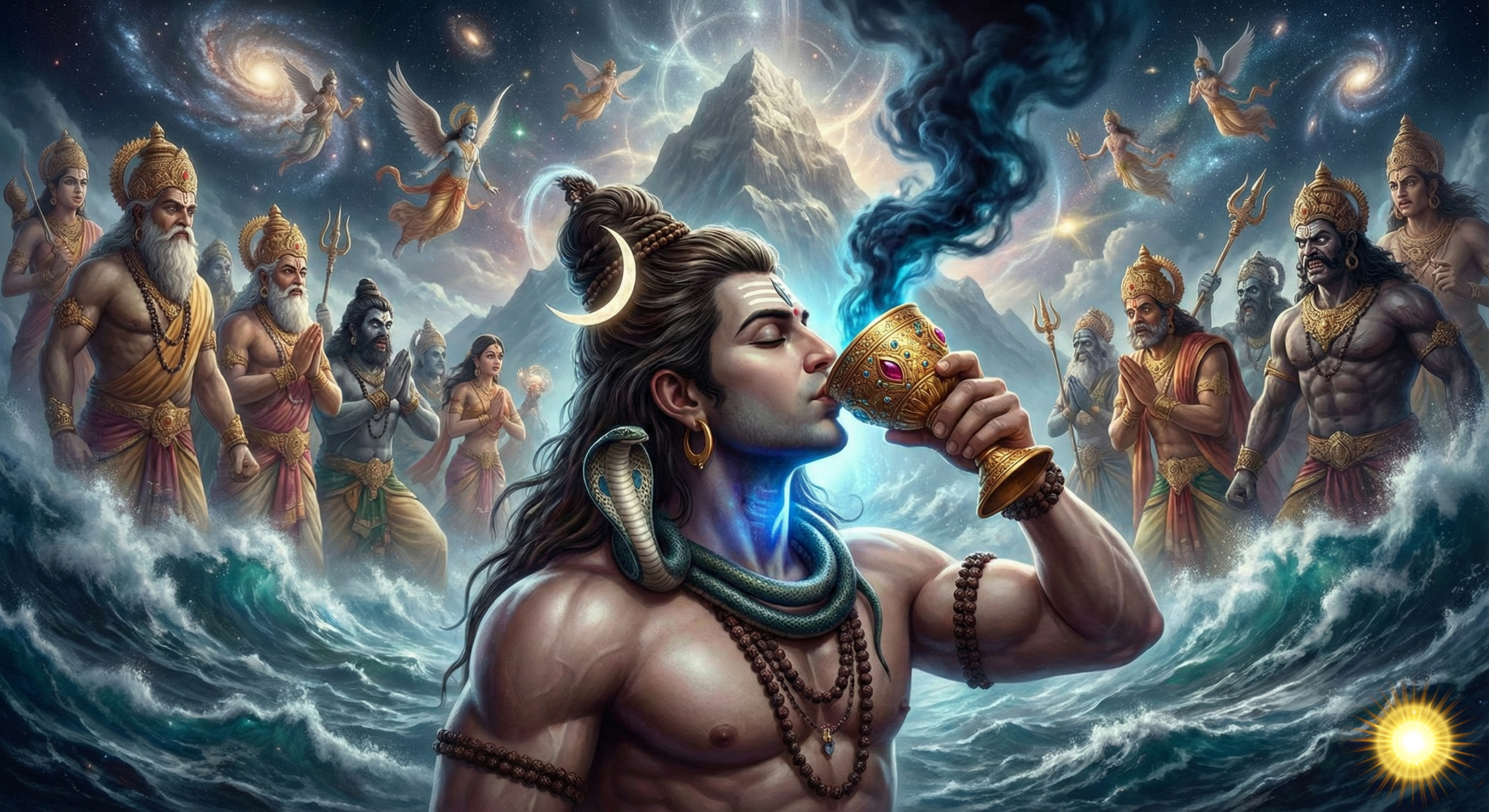
Among the most popular Lord Shiva stories, the churning of the ocean (Samudra Manthan) highlights his essential role as the protector of existence.
The Poison Halahala
The Devas (gods) and Asuras (demons) churned the cosmic ocean to obtain Amrita (the nectar of immortality). But before the nectar could emerge, the ocean threw up Halahala, a poison so potent it threatened to dissolve the entire universe instantly. The gods and demons fled in terror.
The Act of Compassion
With nowhere else to turn, they prayed to Shiva. Without a moment’s hesitation, Shiva scooped up the poison and drank it. He did not do it for glory; he did it because it was necessary. His consort, Parvati, terrified that the poison would kill him, gripped his throat tightly to stop it from descending into his stomach. The poison remained trapped in his throat, turning it a brilliant blue. Thus, he became Neelkanth, the Blue-Throated One.
Spiritual Insight: A true leader—or a parent—swallows the “poison” (negativity, blame, hardship) to protect their family or community. They neither let it poison their internal system (stomach) nor spit it out to harm others. They hold it, neutralize it, and move forward.
3. Tripurantaka: The Destruction of the Three Cities
This story is a masterclass in symbolism, often missed in shorter retellings. It features Shiva in his form as the warrior Tripurantaka.
The Three Flying Fortresses
Three demons—Tara kaksha, Kama laksha, and Vidyun mali—performed severe penance and won a boon from Brahma. They built three flying cities (Tripura) made of gold, silver, and iron. The catch? They could only be destroyed by a single arrow when the three cities aligned in a straight line for just a split second, once every thousand years. Emboldened by this near-immortality, they wreaked havoc on the universe.
The Cosmic Chariot
When the time for destruction came, the gods realized they couldn’t fight alone. They had to become the weapon itself. The Earth became the chariot, the Sun and Moon became the wheels, Lord Brahma was the charioteer, Mount Meru the bow, and Lord Vishnu himself became the arrow.
The Smile that Burned
As Shiva readied the cosmic bow, the gods swelled with pride, thinking, “Without us, Shiva cannot destroy these cities.” Sensing their ego, Shiva didn’t even release the arrow. He simply smiled. The intensity of his divine gaze reduced the three cities to ash instantly. (In some versions, he releases the arrow afterward merely to honor the gods’ contribution).
The Deeper Meaning: The “Three Cities” represent our three bodies: physical, subtle, and causal. The demons are the ego that resides within. Shiva destroys them not with external weapons, but with the light of pure awareness (the smile).
4. The Birth of Kartikeya: The Warrior Born of Fire
The birth of Shiva’s first son, Kartikeya (also known as Murugan or Skanda), is a tale of biological and cosmic engineering.
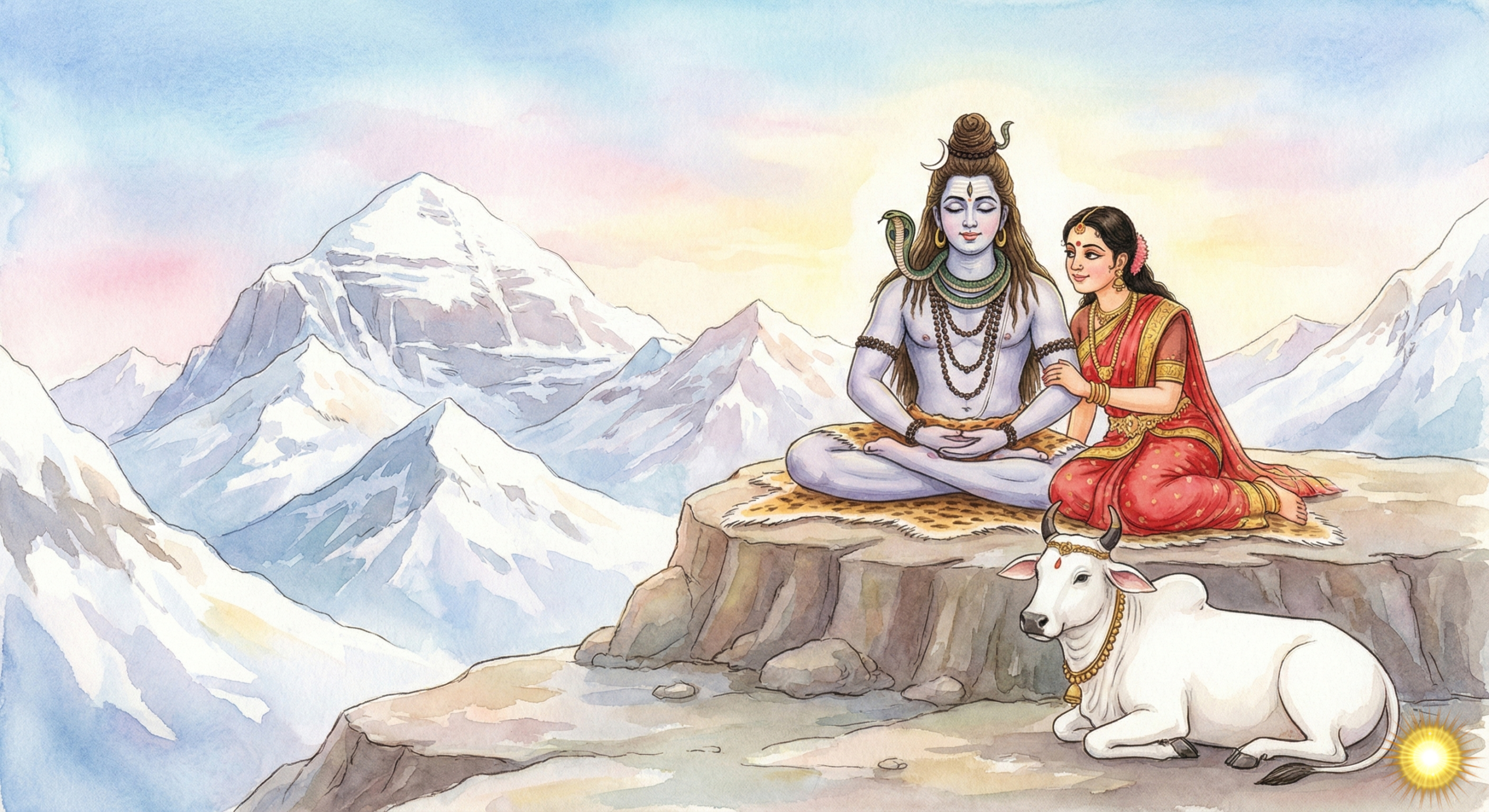
Following Sati’s death, Shiva was in deep meditation. Meanwhile, a demon named Tarakasura had a boon that he could only be killed by Shiva’s son. The gods desperately needed Shiva to marry Parvati (Sati reborn) and produce a child.
Even after their marriage, the union was so intense that the energy (seed) produced could not be held by Parvati alone. It was carried first by Agni (Fire), then by Vayu (Wind), then by the River Ganga, and finally deposited in a forest of reeds (Saravana). There, six babies were born, who were nursed by the six stars of the Pleiades (Krittikas). Parvati later fused them into one child with six heads—Shanmukha.
Human Insight: This story highlights that raising a “warrior” (or a capable child) takes a village. It wasn’t just Shiva and Parvati; the elements of nature and the foster mothers (Krittikas) played a crucial role in shaping the God of War.
5. Kiratarjuniya: The Hunter and the Prince
This action-packed narrative from the Mahabharata showcases Shiva as the ultimate tester of merit and humility.
The Penance of Arjuna
Arjuna, the Pandava prince, needed the Pashupatastra (a divine weapon) to win the coming Kurukshetra war. He went to the Himalayas to meditate on Shiva. To test him, Shiva disguised himself as a tribal hunter (Kirata), accompanied by Parvati as a huntress.
The Duel
A wild boar charged at Arjuna. Both Arjuna and the Hunter shot it simultaneously. An argument broke out over who killed the beast, which quickly turned into a fistfight. To Arjuna’s shock, the tribal hunter matched him blow for blow, eventually wrestling the mighty prince to the ground. Battered and humbled, Arjuna realized this was no ordinary man. He made a clay Linga and offered a garland to it. When he looked up, the garland was around the Hunter’s neck.
Lesson: Shiva destroys the warrior’s ego before granting him power. Power without humility is dangerous; Shiva ensured Arjuna was worthy of the weapon by first breaking his pride.
6. Markandeya: The Boy Who Conquered Death
This story is the origin of the powerful Maha Mrityunjaya Mantra.
The sage Mrikandu was given a difficult choice by Shiva: a foolish son who lives long, or a brilliant son who lives only to age 16. The sage chose the latter. The boy, Markandeya, grew up to be a great devotee of Shiva.
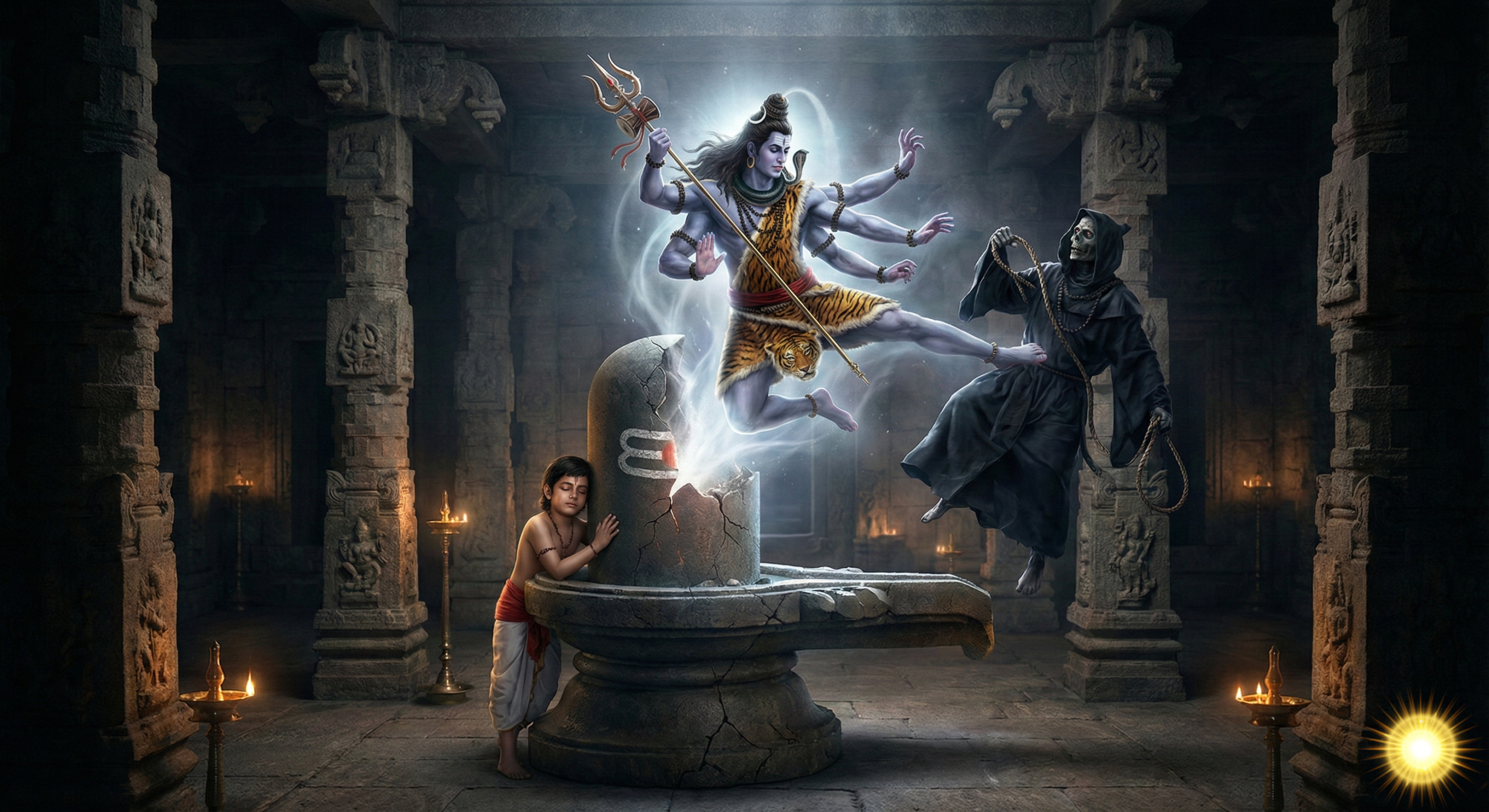
On his 16th birthday, Yama (the God of Death) arrived on his buffalo to claim Markandeya’s soul. The boy, terrified but faithful, ran to the Shiva Linga and hugged it tight. Yama threw his noose, which looped around both the boy and the Linga.
This act of aggression against his devotee enraged Shiva. The Linga split open, and Shiva emerged in his horrific form as Kalantaka (Ender of Time). He kicked Yama in the chest, stopping death itself to save the boy. Later, to restore balance, Yama was revived, but Markandeya was granted eternal youth.
Spiritual Insight: Faith is the only armor against the fear of the inevitable. This story reminds us that spiritual connection transcends physical death.
7. Ravana Lifts Mount Kailash: The Birth of the Shiva Tandava Stotram
Ravana, the villain of the Ramayana, was actually one of Shiva’s greatest devotees. This story explains the complexity of his character.
After conquering the three worlds, Ravana’s flying chariot was blocked by Mount Kailash. Arrogant and drunk on power, he decided to lift the mountain out of his way. As he heaved the massive peak, Parvati was frightened, but Shiva was merely amused.
With a slight movement, Shiva pressed his big toe down. The mountain crashed down, crushing Ravana’s arms. Trapped and in agony, Ravana did not curse. Instead, he realized the greatness of the power above him. He tore open his veins to make strings for a musical instrument and sang hymns in praise of Shiva for a thousand years. This hymn is the famous Shiva Tandava Stotram. Pleased by his art and resilience, Shiva named him “Ravana” (The One Who Roars) and gave him an invincible sword.
8. Kannappa Nayanar: The Hunter who Gave his Eyes
If the previous stories are about power and yoga, this one is about innocent, raw love.
Kannappa was a tribal hunter who found a Shiva Linga in the forest. He didn’t know Sanskrit mantras or rituals. He greeted Shiva like a friend. He would carry water in his mouth (to keep his hands free for his bow) and spit it on the Linga to bathe it. He offered fresh meat, which he had tasted first to ensure it was sweet.
One day, the Linga began to bleed from one eye. Panicked, Kannappa gouged out his own eye with an arrow and placed it on the Linga. The bleeding stopped. Then, the second eye began to bleed. Kannappa, blind in one eye, put his foot on the Linga to mark the spot and prepared to gouge out his remaining eye. Shiva appeared instantly, grabbing his hand and crying out, “Stop, Kannappa!” He restored Kannappa’s sight.
The Lesson: This story is revered because it proves that Bhakti (devotion) supersedes all caste, ritual, and knowledge. Purity of intent matters more than the perfection of the ritual.
9. The Story of the Jyotirlinga: The Pillar of Light
This is the origin story of the Shiva Linga, representing the infinite nature of truth.
Brahma and Vishnu were once arguing about who was superior. Suddenly, a massive pillar of fire (Jyotirlinga) appeared, stretching into infinity in both directions. A voice challenged them to find its end. Vishnu took the form of a boar and dug down for thousands of years but found no base. Brahma took the form of a swan and flew up but found no top. However, Brahma lied and claimed he found the top, presenting a Ketaki flower as a false witness.
Shiva burst forth from the pillar. He cursed Brahma that he would never be worshipped (explaining why there are very few Brahma temples) and blessed Vishnu for his honesty.
Symbolism: The pillar represents the Axis Mundi, the infinite nature of the cosmos. It serves as a warning against the ego of the creator and the preserver; only the destroyer (of ego) knows the absolute truth.
10. Andhaka: The Blind Son
A lesser-known but fascinating story involves Andhaka, created from the sweat of Shiva’s hands when Parvati playfully covered his eyes. Because he was born in darkness (when Shiva’s eyes were closed), he was blind and filled with ignorance.
He eventually became a demon king and, driven by his blind nature, tried to capture Parvati, unaware she was his mother. Shiva impaled him on his trident. Suspended between heaven and earth on the trident, Andhaka’s ego was “dried out” by the heat of Shiva’s third eye. He eventually realized his sin and became a devotee.
Psychological Meaning: Andhaka represents the darker side of the human psyche—blind desire that destroys boundaries. Shiva’s trident doesn’t just kill; it elevates the soul to a place where it can be purified.
11. Nataraja: The Cosmic Dancer
No list of Lord Shiva stories is complete without the symbolism of the Nataraja.
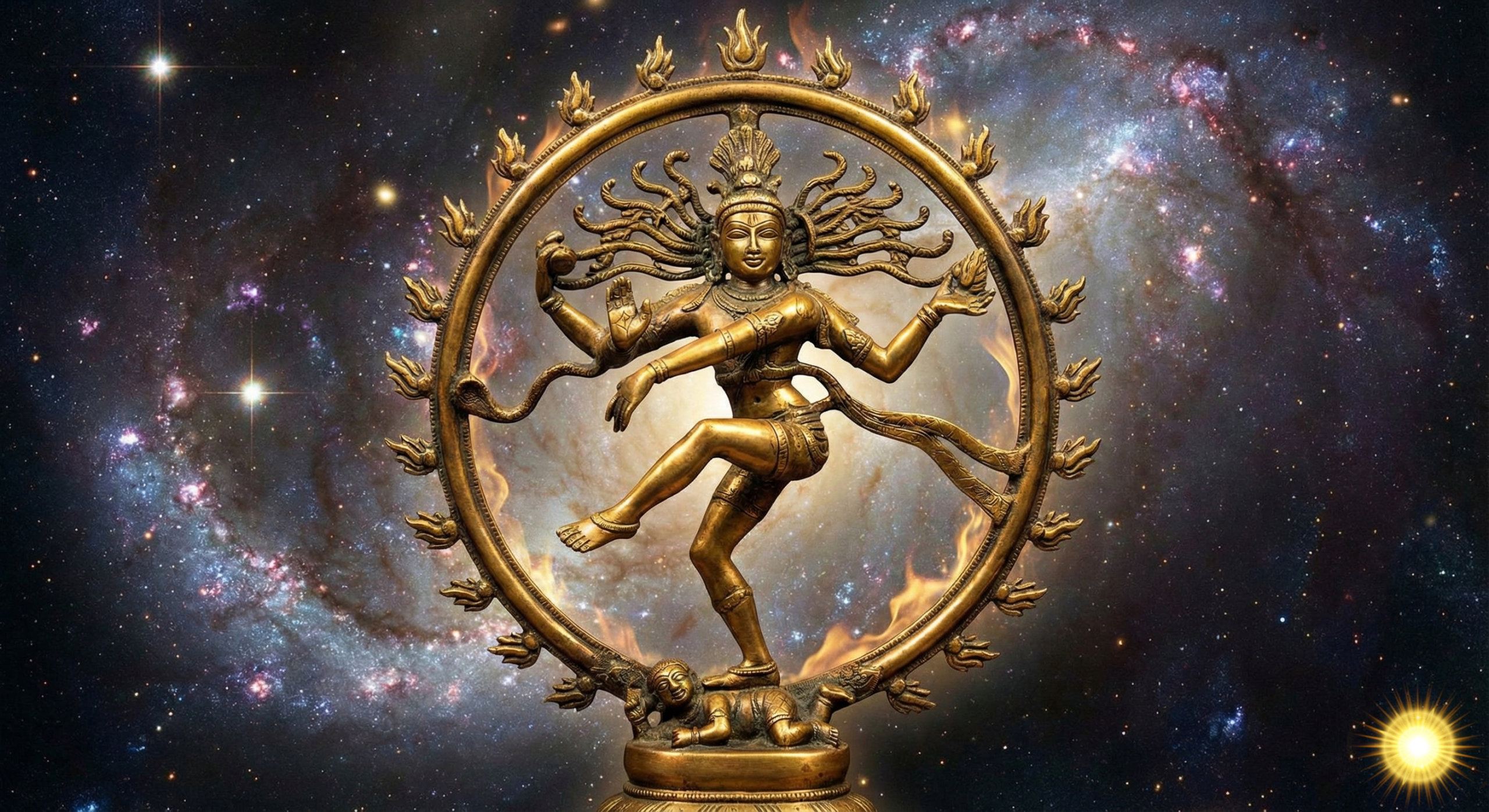
The story goes that a group of ignorant sages sent a dwarf demon, Apasmara (representing ignorance), to fight Shiva. Shiva simply stepped on the dwarf’s back and began to dance. This is the Ananda Tandava (Dance of Bliss).
Upper Right Hand: Holds the Damaru (drum), the sound of creation.
Upper Left Hand: Holds Agni (fire), the force of destruction.
Lower Right Hand: Abhaya Mudra (be not afraid).
Lower Left Hand: Points to his raised foot, the refuge for the soul.
The Dwarf: Ignorance, which Shiva suppresses but does not kill—because ignorance is eternal, it must be constantly kept in check.
Conclusion: Why These Stories Matter Today
These Lord Shiva stories are not just relics of the past; they are vibrant, living narratives that offer solace and wisdom in the modern world. Whether it is the resilience of Sati, the compassion of the Neelkanth, or the innocent love of Kannappa, each myth holds a mirror to our own lives.
Shiva is the chaos that disrupts our comfort zones to help us grow. He is the silence that follows the noise. By understanding his stories, we don’t just learn about a Hindu god; we learn about the cycle of life, death, and the eternal consciousness that watches over it all.
Read More ↘️
How to Chant Maha Mrityunjaya Mantra for Healing: A Complete Guide
Frequently Asked Questions (FAQs)
1. Why does Lord Shiva have a snake around his neck?
The snake, Vasuki, represents the ego and the fear of death. By wearing it as an ornament, Shiva shows that he has conquered fear. It also symbolizes the coiled energy (Kundalini) that rests in the human body, waiting to be awakened.
2. Why is Shiva known as ‘The Destroyer’?
Destruction in Hindu philosophy is not negative. Shiva destroys the old to make way for the new. He destroys illusions, ego, and attachments, paving the path for spiritual liberation (Moksha).
3. What is the significance of the Crescent Moon on Shiva’s head?
The moon represents the mind, which waxes and wanes like human moods. Shiva wearing it symbolizes his perfect control over the mind and the flow of time.
4. Who are the children of Lord Shiva?
Shiva and Parvati have two main sons: Ganesha (the remover of obstacles) and Kartikeya (the god of war). In various traditions, deities like Ayyappa and Ashokasundari are also considered their children.
5. Why does Shiva carry a Trident (Trishul)?
The three prongs represent the three Gunas (qualities of nature): Sattva (balance), Rajas (passion), and Tamas (inertia). Shiva controls all three. They also symbolize the mastery over the past, present, and future.
6. Did Shiva really cut off Ganesha’s head?
Yes, in the most popular version, Shiva severed Ganesha’s head because the boy refused to let him enter Parvati’s chamber. This act led to Ganesha receiving the elephant head, symbolizing supreme wisdom, intellect, and the ability to distinguish between the real and the unreal.
7. What is the best day to worship Lord Shiva?
While Mondays are traditionally dedicated to Shiva, the festival of Maha Shivaratri (The Great Night of Shiva) is considered the most auspicious time