
Beyond Devotion: How Lord Shiva Images Can Rewire Your Brain for Peace and Focus
In our hyper-stimulated world, the search for a quiet mind feels more urgent than ever. We’re drowning in a sea of notifications, deadlines, and an endless barrage of information, leading to unprecedented levels of stress and anxiety. While many turn to modern solutions like wellness apps and biohacking, an ancient tool, rich with symbolic power, offers a profound pathway to mental clarity: the practice of visual meditation using sacred imagery, specifically, images of Lord Shiva.
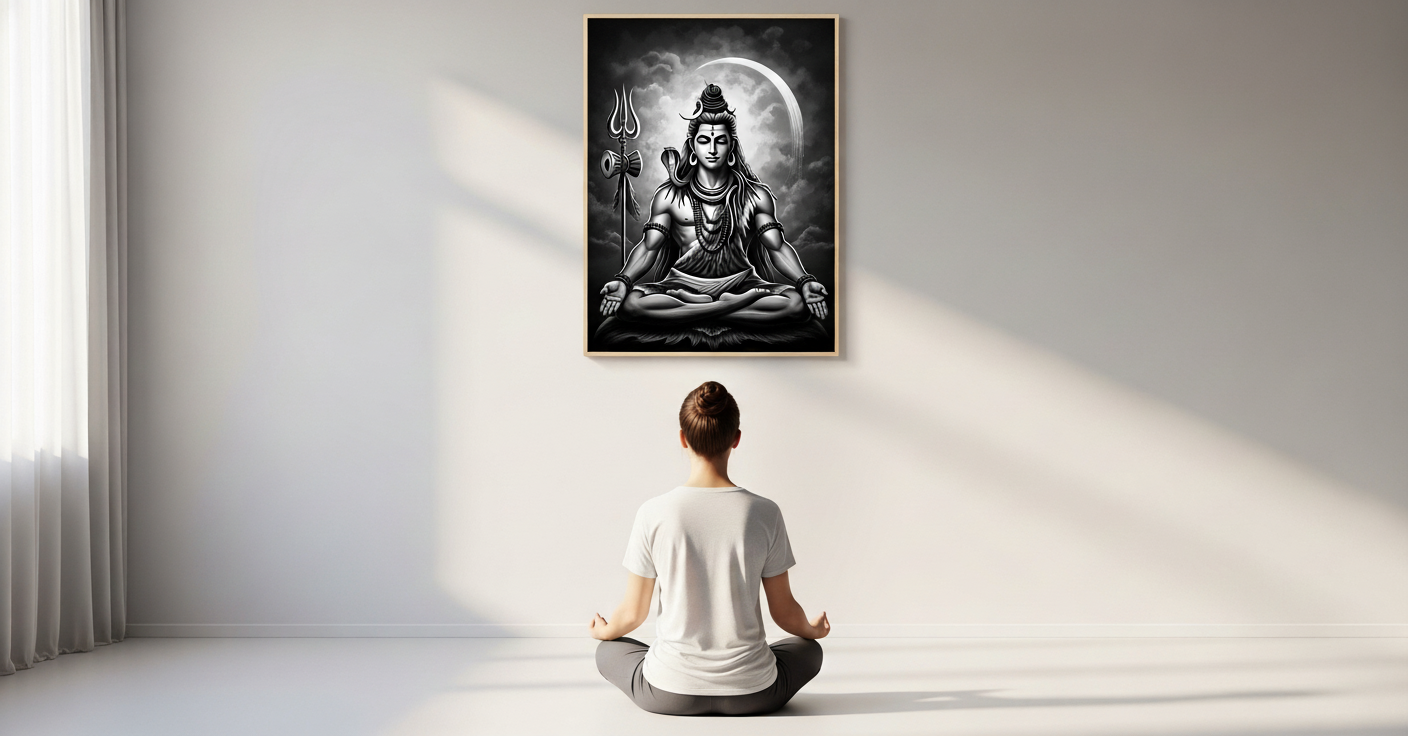
You don’t need to be a Hindu scholar or a devout follower to unlock the psychological benefits encoded in these powerful archetypes. Viewed through the lens of neuroscience and psychology, Lord Shiva images transform from religious icons into sophisticated tools for mindfulness. They serve as a focal point—a *drishti*—that can calm the brain’s chaotic chatter, reduce stress hormones, and cultivate a state of deep, restorative focus. This guide will explore the science-backed ways that integrating these images into a secular mindfulness practice can enhance your mental and emotional well-being.
The Modern Epidemic of Stress: Why Your Brain Needs an Anchor
Chronic stress isn’t just a feeling; it’s a physiological state. When we’re constantly on high alert, our bodies are flooded with cortisol, the primary stress hormone. This perpetual “fight-or-flight” mode impairs cognitive function, weakens the immune system, and disrupts emotional regulation. The part of our brain responsible for our wandering, anxious thoughts, the Default Mode Network (DMN), becomes overactive, trapping us in cycles of rumination about the past and worry about the future.
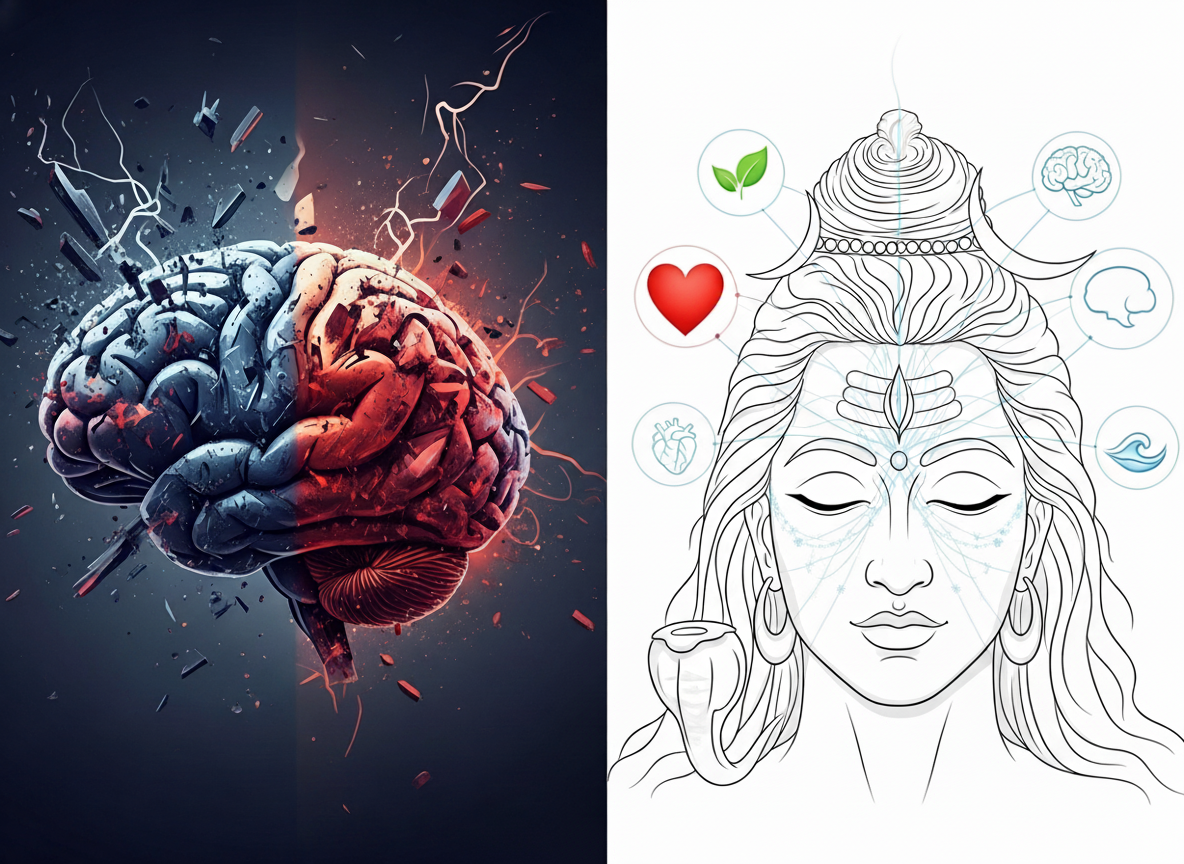
Meditation is a proven method to counteract this. Research in neuroscience shows that consistent meditation practice can physically alter the brain. It reduces the density of the amygdala (the brain’s fear center) and strengthens the prefrontal cortex, which is associated with focus and emotional control. Visual meditation, in particular, is highly effective because our brains are wired to process images. A single, powerful symbol can serve as an anchor, giving the restless mind a specific task and pulling it away from the chaos of the DMN.
> “Symbols are objects or images that help the mind focus on abstract concepts such as peace or compassion… Using a symbol for your spiritual practice is a means to springboard your mind onto something higher and more peaceful.” – Manisha Melwani
Deconstructing the Archetype: Shiva’s Symbolism for Mental Wellness
The imagery of Lord Shiva is a masterclass in psychological symbolism. Each element represents a specific aspect of the human experience and a mental state we can cultivate. By focusing on these symbols, we are not worshipping; we are activating and exploring these powerful concepts within our own minds. This practice aligns with the principles of Jungian psychology, which posits that archetypes are universal patterns within the collective unconscious that can be used for personal growth and healing.
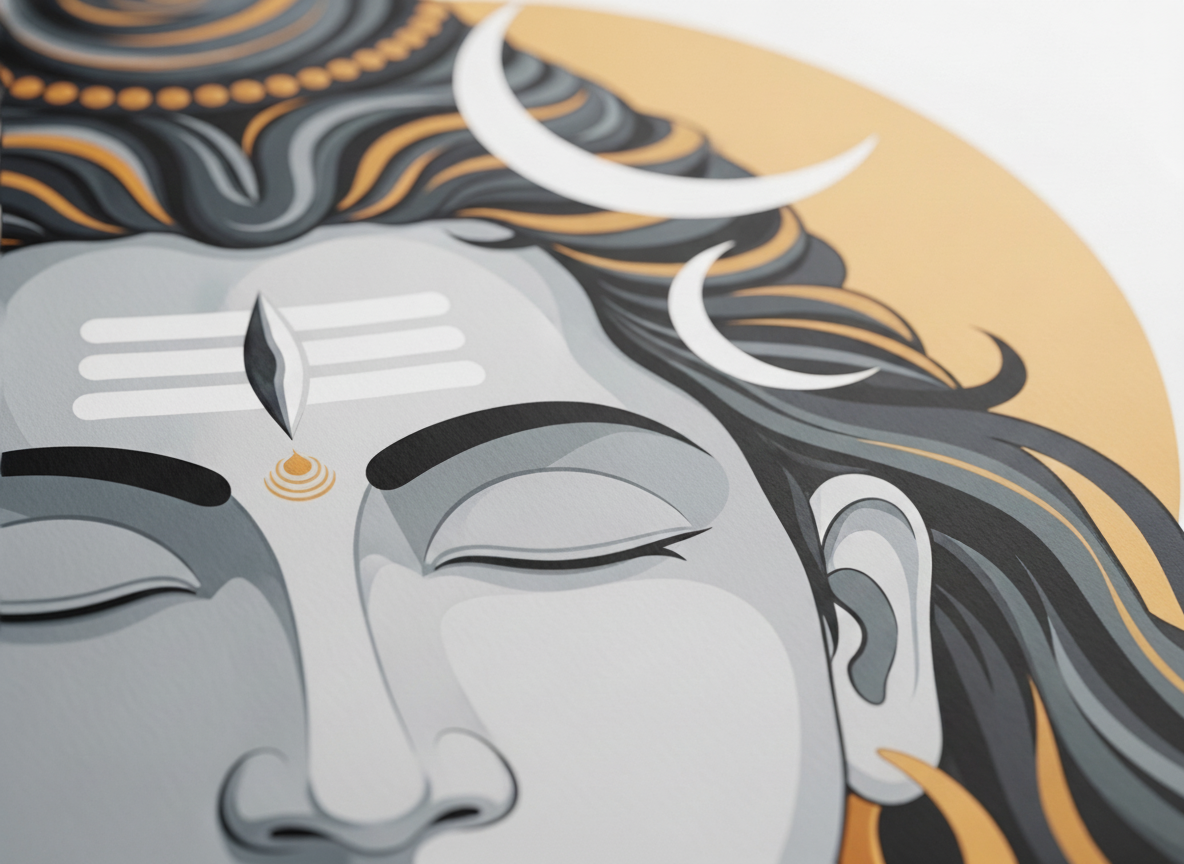
Here’s a breakdown of the key symbols found in Lord Shiva images and their corresponding psychological benefits for a mindfulness practice:
| Symbol | Visual Representation | Psychological Benefit & Meditation Focus |
| :— | :— | :— |
| The Third Eye | An eye in the center of the forehead. | Focus & Intuition: This is the ultimate symbol of focused awareness. Meditating on the third eye helps quiet external distractions and turn your attention inward, enhancing clarity and intuitive insight. It trains the mind to see beyond immediate, reactive thoughts. |
| The Crescent Moon | A small crescent moon in his matted hair. | Emotional Regulation: The moon governs cycles and emotions. This symbol represents having mastery over the mind’s fluctuations. Focusing on it can help you cultivate emotional balance and remain calm amidst life’s ups and downs. |
| The Serpent (Vasuki)| A cobra coiled around his neck. | Fear Management & Transformation: Snakes symbolize primal energy, fear, and renewal (shedding skin). Shiva’s calm mastery over the serpent represents the ability to acknowledge and control fear without being paralyzed by it. It’s a focus point for transforming anxiety into conscious energy. |
| The Trident (Trishula) | A three-pronged spear. | Overcoming Negative Patterns: The three prongs are often said to represent the destruction of the ego, attachment, and aversion—the three primary sources of suffering. Meditating on the trident can empower you to identify and release self-sabotaging thoughts and behaviors. |
| The Meditative Pose | Seated in Padmasana (Lotus Pose). | Stability & Inner Stillness: This posture is the embodiment of unshakable calm and groundedness. Visualizing this stable base helps cultivate a sense of inner peace and resilience, reminding you that you can remain centered even when the world around you is in turmoil. |
| The River Ganga | The sacred river flowing from his hair. | Clarity & Purification: This symbolizes the constant flow of knowledge and the cleansing of mental impurities. Focusing on this image can aid in letting go of mental clutter and achieving a state of clear, flowing consciousness. |
A Practical Guide: Using Lord Shiva Images for Your Mindfulness Practice
Integrating this practice into your life is simple and requires no prior experience. The goal is to use the image as a tool to train your attention, not as an object of worship. Here’s a step-by-step guide to get started.
Step 1: Choose Your Image
Select a high-quality image of Lord Shiva that resonates with you. There are many variations:
* The Meditator (Adiyogi): Often depicted in deep meditation on Mount Kailash. This is ideal for cultivating stillness, focus, and inner peace.
* The Dancer (Nataraja): A dynamic pose representing the cosmic cycle of creation and destruction. This can be used for meditations on change, acceptance, and finding balance in motion.
Choose an image that feels calming and powerful to you. The aesthetic quality is important, as it will be your single point of focus.
Step 2: Create Your Space
Find a quiet, comfortable place where you won’t be disturbed for 10-15 minutes. You can sit on a cushion on the floor or in a chair with your feet flat. The key is to have an upright, yet relaxed, posture. Place the image at eye level a few feet in front of you so you can gaze at it without straining.
Step 3: The Visual Meditation Technique (Trāṭaka)
This practice is a form of *Trāṭaka*, or concentrated gazing.
1. Settle In (1 Minute): Begin by closing your eyes and taking three deep, slow breaths. Inhale through your nose, and exhale slowly through your mouth. Allow your body to relax and your mind to settle.
2. Open Your Gaze (5-10 Minutes): Gently open your eyes and let them rest on the image of Lord Shiva. Don’t stare intensely; maintain a soft, relaxed gaze. Choose one specific point on the image to focus on—perhaps the third eye, the crescent moon, or the calm expression on his face.
3. Observe Without Judgment: Your mind *will* wander. This is normal. When you notice your thoughts drifting, gently and without frustration, guide your attention back to the image. Each time you do this, you are strengthening your “focus muscle.”
4. Internalize the Image: After a few minutes, close your eyes and try to visualize the image in your mind’s eye, in the space between your eyebrows. Hold the mental picture for as long as you can. If it fades, simply open your eyes and gaze at the physical image again for a minute before closing them once more.
5. Conclude (1 Minute): Release the visualization. Bring your awareness back to your breath for a few moments. Notice how you feel—perhaps calmer, more centered, or clearer. Slowly open your eyes.
Expert Analysis: The Science of the Gaze
Why is this simple act of gazing so powerful? From a neuroscientific perspective, focusing your vision on a single, non-moving point stabilizes the mind. It reduces the frequency of saccades (rapid, involuntary eye movements), which are directly linked to thought processes. When your eyes are still, your mind tends to follow suit. This technique essentially gives your prefrontal cortex—the CEO of your brain—a clear, simple task, which helps down-regulate the activity in the more chaotic, emotional parts of the brain.
Conclusion: An Ancient Key to Modern Mental Wellness
In the quest for mental health and peak performance, we often overlook the profound wisdom embedded in ancient traditions. Lord Shiva images, when approached as psychological archetypes rather than religious icons, offer a powerful, accessible, and scientifically-supported tool for enhancing mindfulness.
By focusing on the rich symbolism of the third eye, the serpent, and the meditative pose, you are engaging in a sophisticated form of brain training. You are teaching yourself to manage fear, regulate emotions, and cultivate unshakable focus. This practice is not about belief; it’s about attention. It’s a direct path to quieting the noise, reducing the physiological impact of stress, and connecting with a deeper sense of stillness that resides within you.
Read more ↘️
Luxury Spiritual Retreats for Executives: The Ultimate ROI on Wellness
Frequently Asked Questions (FAQs)
Q: Do I need to be religious to use Lord Shiva images for meditation?
A: Absolutely not. This guide approaches the practice from a secular, psychological, and neuroscientific perspective. The images are used as focus tools and symbolic archetypes for mental wellness, not as objects of religious worship. The benefits of focus and engaging with powerful symbols are universal.
Q: How is this different from other types of meditation?
A: While many meditation forms focus on the breath or bodily sensations, visual meditation (Trāṭaka) uses an external object as the anchor for attention. For visual people, this can be a much easier and more engaging way to begin a practice and prevent the mind from wandering, as it provides a concrete focal point.
Q: How long will it take to see benefits?
A: Like any form of exercise, consistency is key. While you may feel calmer and more centered after just one session, the long-term neurological benefits, such as reduced stress and improved focus, are built over time. Aim for 5-10 minutes daily to start building a consistent habit.
Q: Can I use other sacred images for this practice?
A: Yes. The principles of visual meditation and archetypal psychology can be applied to any symbol or image that you find powerful and resonant. Figures like the Buddha, mandalas, or even symbols from nature can be used effectively. The key is to choose an image rich with meaning that helps you focus.
Q: Where can I find good quality Lord Shiva images?
A: You can find high-resolution images suitable for meditation on museum websites, stock photography sites, or through online stores that sell spiritual art. Choose a clear, well-composed image that is not overly cluttered or distracting.
2 thoughts on “Lord Shiva Images & Mental Wellness: A Neuroscientist’s Guide”