

Lord Shiva Images: The Ultimate Guide to Meaning, Vastu, and 4K Art (2026 Edition)
Have you ever found yourself staring at a picture of Mahadev and feeling a sudden, inexplicable wave of calm? You are not alone. There is a magnetic pull in Lord Shiva images that goes beyond religion. It touches something primal in our psychology. Whether it’s the intense gaze of the Adiyogi or the cosmic rhythm of the Nataraja, these visuals speak a language your soul understands even if your mind doesn’t.
We live in a time where our screens are flooded with content, yet we keep coming back to this ancient figure. Why? Because Shiva isn’t just a deity to be worshipped; he is a state of being to be experienced. When you search for his image, you are often searching for a piece of that stillness to keep with you—on your phone, on your office wall, or in your prayer room.
This guide is your deep dive. We are going to strip away the surface layers and look at what these images actually communicate. We will cover how to place them in your home according to Vastu, the explosion of AI-generated Shiva art in 2025, and how to decode the complex symbols hiding in plain sight.
The Psychology Behind the Search
Why do millions of people type “Lord Shiva images” into search bars every single day? It isn’t just about finding a cool wallpaper. It is about anchoring.
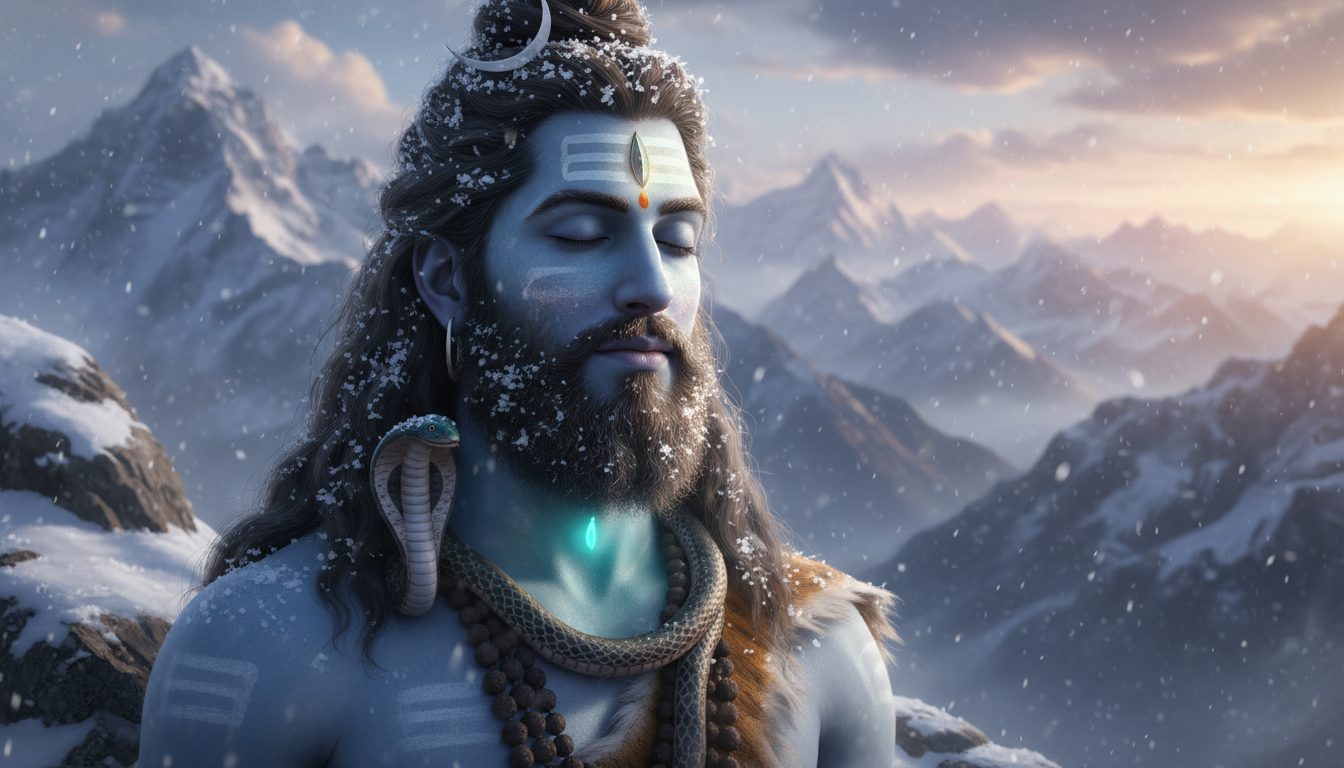
In a chaotic life, the image of Shiva represents the “Still Point.” He is the eye of the storm. When you look at a photo of Shiva meditating in the Himalayas, your mirror neurons fire. You unconsciously mimic that stillness. You might be on a crowded subway or in a stressful meeting, but a quick glance at your lock screen reminds you that chaos is external, but peace is internal.
For many, these images serve as:
* Digital Talismans: A protective barrier against negativity.
* Focus Triggers: A visual cue to bring the wandering mind back to the present.
* Aesthetic Rebellion: Shiva, with his ash and snakes, defies the polished, materialistic look of modern life. He is raw, and that rawness appeals to us.
Decoding the Iconography: What Are You Looking At?
When you download Lord Shiva images, you aren’t just downloading a picture of a man with a trident. You are downloading a library of philosophy compressed into a single frame. Every element has a specific coding. Let’s break down the anatomy of these images so you know exactly what energy you are inviting into your space.
1. The Crescent Moon (Chandrashekhara)
You will often see a tiny sliver of a moon near his matted locks. This isn’t just decoration. The moon waxes and wanes; it represents time. Shiva wearing the moon symbolizes that he is the master of time, not a victim of it. He wears time like an ornament. For you, this is a reminder that “this too shall pass.”
2. The Snake (Vasuki)
Most people fear snakes. They represent death and the unknown. Shiva wears the King Cobra, Vasuki, around his neck effortlessly. This signifies fearlessness. It means he has tamed his ego and his fear of mortality. The snake also represents the Kundalini energy—the dormant power coiled at the base of the spine, waiting to rise.
3. The Third Eye (Triambaka)
This is perhaps the most famous symbol. The two physical eyes see the physical world. The third eye, centered on the forehead, sees the truth. When the third eye opens, it destroys ignorance (often dramatized as burning the world). In your images, if the third eye is prominent, it represents insight and clarity—seeing things as they actually are, not as you wish them to be.
4. The Trident (Trishul)
The three prongs represent the three Gunas (qualities of nature):
* Sattva (balance/harmony)
* Rajas (activity/passion)
* Tamas (inertia/darkness)
Shiva holding the trishul shows he is beyond these three states. He controls them; they do not control him. It also symbolizes the destruction of the three worlds: physical, mental, and spiritual ego.
5. The River Ganga
Flowing from his hair is a stream of water. This represents knowledge (Jhana). Knowledge can be destructive if it comes down like a flood. Shiva breaks the fall, releasing it gently to the world. It signifies that wisdom should be cooling, purifying, and accessible.
6. The Damru (Drum)
This small hourglass-shaped drum represents the cosmic sound—Om. It is the sound of creation. In one hand, he holds fire (destruction), and in the other, the drum (creation). This balance is the rhythm of the universe.
Vastu Shastra: Where to Place Lord Shiva Images
If you plan to print high-resolution art for your home, placement is everything. According to Vastu Shastra (the Indian science of architecture), energy flows in specific directions. Placing a powerful deity like Shiva in the wrong spot can create energy clashes.
The Golden Rule: North and Northeast
The absolute best direction for Lord Shiva images is the North or Northeast corner of your home.
* Why? The Northeast is the “Ishan Kona” (God’s corner). It represents clarity and spiritual connection.
* Mount Kailash Connection: Mythologically, Shiva resides in the North. Placing him here aligns your home with his abode.
The “No-Go” Zones
Avoid placing Shiva photos in these areas:
* Under the Stairs: This is considered disrespectful and heavy energy.
* Bedrooms: Shiva represents extreme asceticism and powerful energy. This can clash with the restful, romantic energy needed in a bedroom. If you must, keep it small and meditative.
* Facing South: In Vastu, South is the direction of Yama (death). While Shiva conquers death, placing his image facing South is generally avoided for household harmony.
Angry vs. Calm Shiva
This is a critical pro tip.
Do NOT keep images of the angry Shiva (Rudra or Bhairava) in a family home.
While these forms are powerful, they carry a fierce vibration that creates restlessness.
Do choose:
* The Meditative Shiva: Eyes closed, smiling slightly. This brings peace.
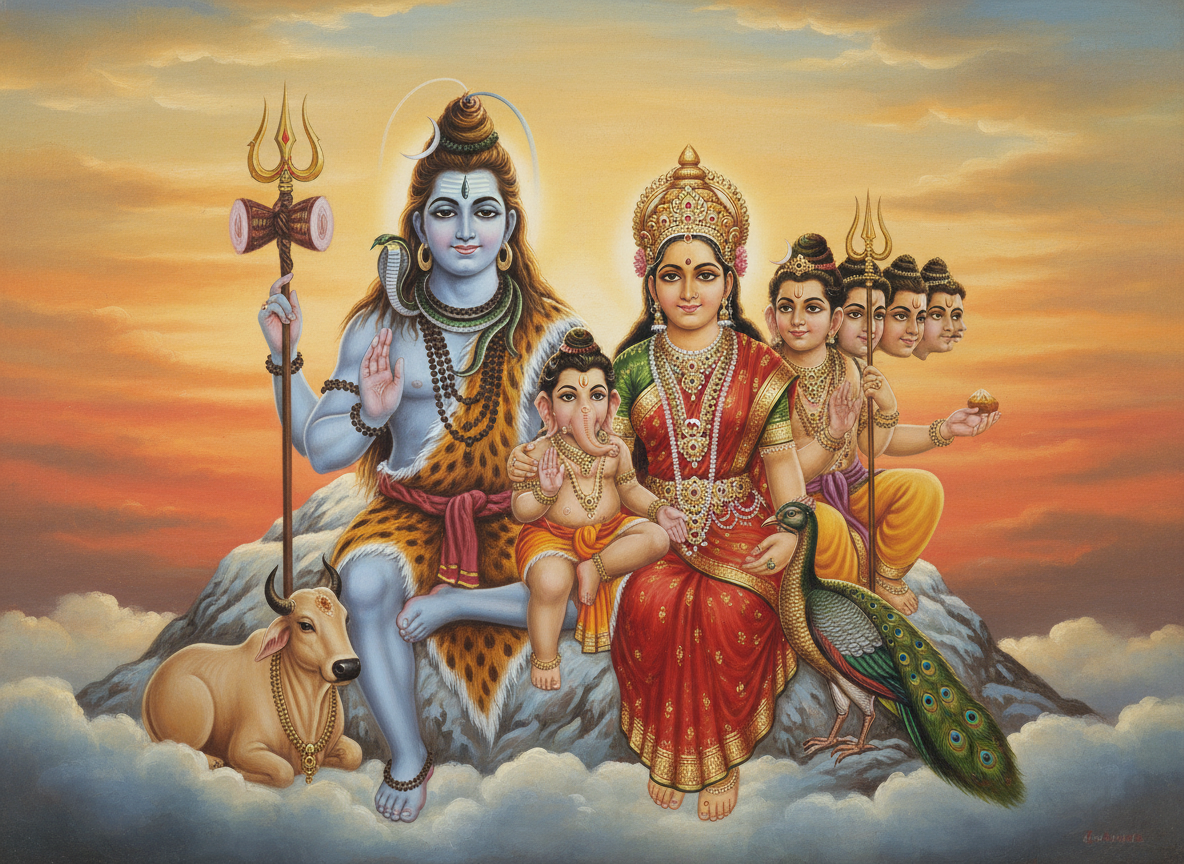
* Shiv Parivar: Shiva with Parvati, Ganesha, and Kartikeya. This is the ultimate symbol of family harmony and is excellent for the living room.
| Image Type | Best For | Vastu Direction | Energy Vibe |
| :— | :— | :— | :— |
| Adiyogi (Meditating) | Study Room / Altar | North / NE | Focus, Calm, Inner Peace |
| Nataraja (Dancing) | Creative Studio | East / SE | Energy, Rhythm, Creativity |
| Shiv Parivar (Family) | Living Room | Northeast | Harmony, Love, Bonding |
| Rudra (Fierce) | Gym / Dojo (Caution) | South (Rare) | Power, Aggression, Protection |
The Forms of Shiva: Which One Do You Need?
Shiva is a complex character with many personas. The image you choose should align with the energy you want to cultivate in your life right now.
1. The Adiyogi (The First Yogi)
This is the most popular form for the modern generation. He sits in Padmasana (lotus pose), eyes half-closed.
* Vibe: Stillness. Solitude.
* Best For: People dealing with anxiety, students, and meditators.
2. The Nataraja (King of Dance)
Shiva surrounded by a ring of fire, one leg raised.
* Vibe: Dynamic movement.
* Symbolism: He is dancing the universe into existence and stomping on the dwarf of ignorance.
* Best For: Artists, dancers, and anyone needing to shake up a stagnant life.
3. The Ardhanarishvara (Half-Woman Lord)
Half Shiva, half Parvati.
* Vibe: Balance. Equality.
* Symbolism: It shows that the masculine and feminine are equal and inseparable.
* Best For: Couples and resolving relationship conflicts.
4. The Neelkanth (The Blue-Throated One)
Shown with a blue throat from drinking the Halahala poison to save the world.
* Vibe: Sacrifice. Protection.
* Best For: Doctors, healers, and protectors.
2025 Trends: AI Art and The Digital Renaissance
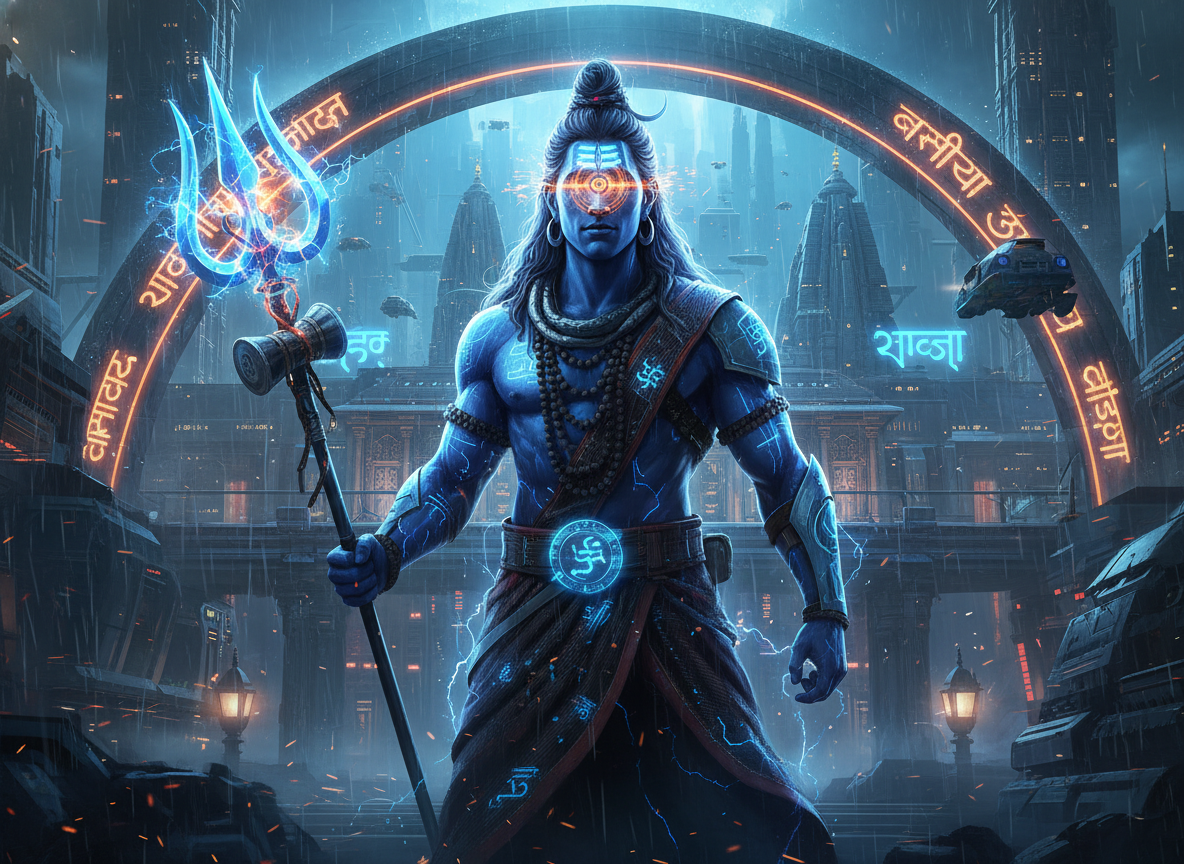
The way we visualize gods is changing rapidly. In 2024 and heading into 2025, AI-generated Lord Shiva images have taken over social media. Tools like Midjourney and DALL-E represent Shiva in ways traditional artists rarely did.
The “Cyber-Shiva” Aesthetic
We are seeing a fusion of ancient iconography with futuristic elements. Imagine Shiva in a neon-lit Himalayan cave, or the third eye rendered with hyper-realistic cosmic dust. These images appeal to the younger, tech-savvy generation who see spirituality as timeless, fitting into both the Stone Age and the Space Age.
Hyper-Realism (8K and Beyond)
The demand for 4K Lord Shiva wallpapers for mobile devices has pushed creators to make images with insane detail. You can see the texture of the ash on the skin, the individual scales on the snake, and the water droplets in the Ganga. This level of detail makes the image feel “present,” almost like a FaceTime call with the divine.
Pro Tip for Creators: If you are generating AI art of Shiva, be mindful. The algorithm doesn’t understand theology. It might put the moon on the wrong side or give him the wrong number of arms. Always cross-reference with traditional iconography to remain respectful.
Tattoo Inspiration: Wearing the Image
Getting a permanent image of Shiva on your skin is a massive commitment. It is the ultimate form of carrying the deity with you.
* The Trishul Tattoo: Minimalist and sharp. Usually placed on the forearm or back of the neck. It’s a symbol of control.
* The Mahamrityunjaya Mantra: often wraps around a Shiva portrait.
* The Third Eye: A small, geometric tattoo often placed on the finger or wrist.
A Note on Placement: In Hindu culture, the feet are considered the lowest part of the body (touching the dirt). Never get a tattoo of a deity on your feet, ankles, or legs. Keep it above the waist to show respect.
Mahashivratri 2025: Preparing Your Visual Space
Mahashivratri (The Great Night of Shiva) falls on February 26, 2025. This is the biggest night for Shiva devotees.
Your visual environment plays a huge role in this festival.
1. Change your digital wallpaper to a dark, meditative Shiva theme (since it is a festival of the night).
2. Clean your home altar. If you have a framed photo, wipe the glass with rose water.
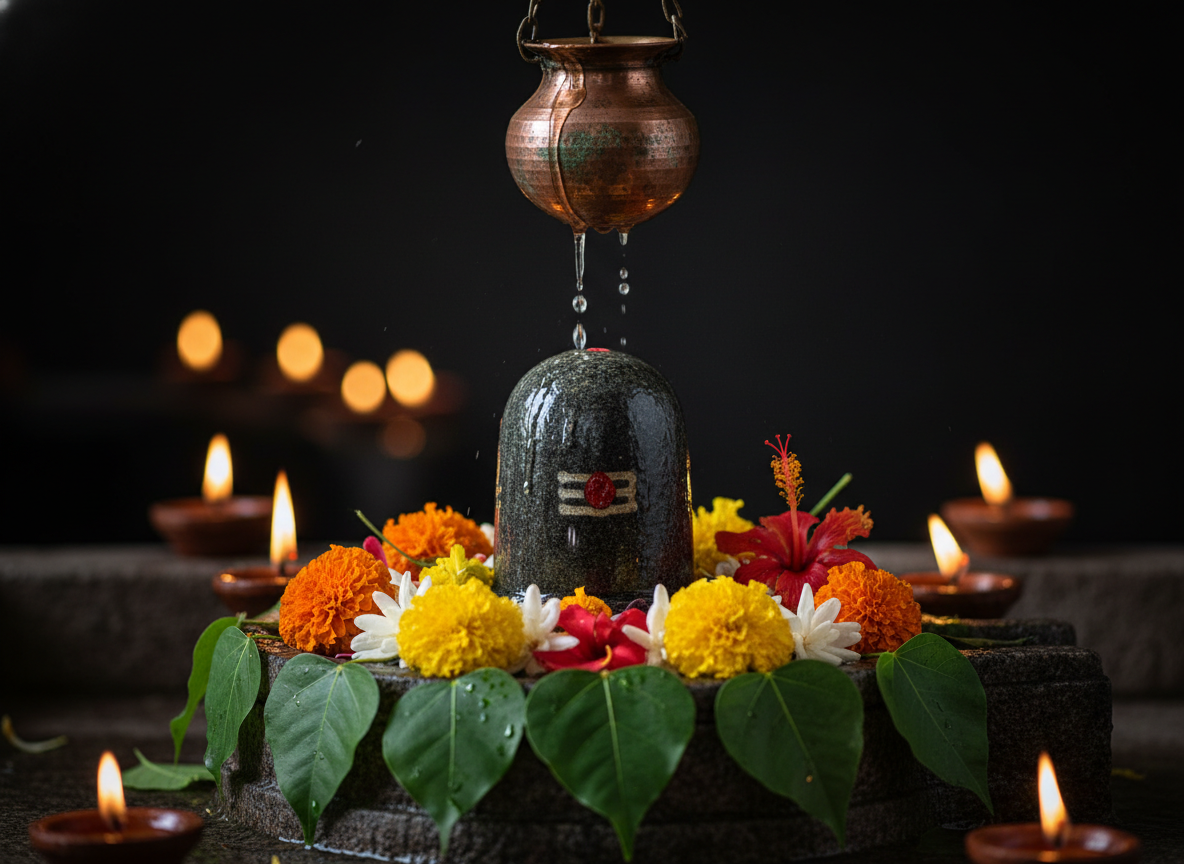
3. The Lingam Focus: If you do the midnight meditation, focusing on an image of the Shiva Lingam is recommended as it represents the formless energy, which is easier to meditate on during the deep hours of the night.
Key Takeaways
> * Intent Matters: Don’t just pick a picture because it looks cool. Pick one that matches the energy you need (Peace vs. Power).
> * Check the Compass: Keep Shiva in the North or Northeast of your home.
> * Respect the Form: Avoid angry forms in the bedroom.
* Digital or Physical: Whether it is an OLED screen or a stone statue, the connection is in your mind, not the material.
Read More ↘️
Lord Shiva: Cosmic Mantras, Meditation & HD Wallpapers for Inner Peace
Frequently Asked Questions (FAQ)
Q1: Can I keep a dancing Shiva (Nataraja) statue at home?
Yes, but with a caveat. The Nataraja represents intense cosmic energy and destruction/creation. It is best placed in a creative space, study, or living room. Avoid placing it in the bedroom as the energy is too active for sleep.
Q2: What is the significance of the blue skin in Lord Shiva images?
Shiva is often depicted as blue, but he isn’t actually blue-skinned. The blue color represents the “infinite,” like the sky or the ocean. It also references the story where he swallowed the poison (Halahala) which turned his throat blue (Neelkanth), signifying his willingness to absorb the world’s negativity to protect us.
Q3: Is it okay to use AI-generated Shiva images for worship?
Absolutely. The image is just a focal point for your devotion (Bhakti). If an AI image inspires a sense of reverence and peace in you, it serves its purpose. God is in the sentiment, not the medium.
Q4: Which direction should a Shiva photo face in an office?
In an office, place the image behind you or on the North wall, so you face North while working. This invites the blessings of Kuber (wealth) and Shiva (wisdom), a perfect combo for business.
Q5: Why do some images show Shiva with a leopard skin and others with a tiger skin?
Traditionally, it is a tiger skin. The tiger represents lust and primal desire. By sitting on the tiger skin, Shiva demonstrates that he has conquered lust and animalistic urges. Variations with leopard skin are artistic interpretations, but the symbolism of conquering animal nature remains the same.
Q6: Can I gift a Lord Shiva image to someone?
Yes, it is considered a very auspicious gift. A “Shiv Parivar” (Family) photo is an excellent gift for housewarmings or weddings, wishing the couple a harmonious family life.
The Final Word
When you scroll through the endless gallery of Lord Shiva images, you are looking for a reflection of your own potential. The calm face of the Adiyogi reminds you that you can be peaceful in a chaotic world. The fire of the Nataraja reminds you that you can dance through the storms of life.
So, go ahead. Find that 4K wallpaper. Print that canvas for your wall. But remember, the image is just the starting line. The goal is to close your eyes and find that same Shiva within yourself.
*Om Namah Shivaya.*
1 thought on “Lord Shiva Images: 2025 Guide to Symbolism, Vastu & 4K Art”