

Best Time to Chant Om Namah Shivaya USA: In the United States, time is our most scarce resource. We live by the clock—racing against deadlines in New York, sitting in gridlock traffic in Los Angeles, or juggling family schedules in the suburbs. We are constantly asking, “When will I have time?”
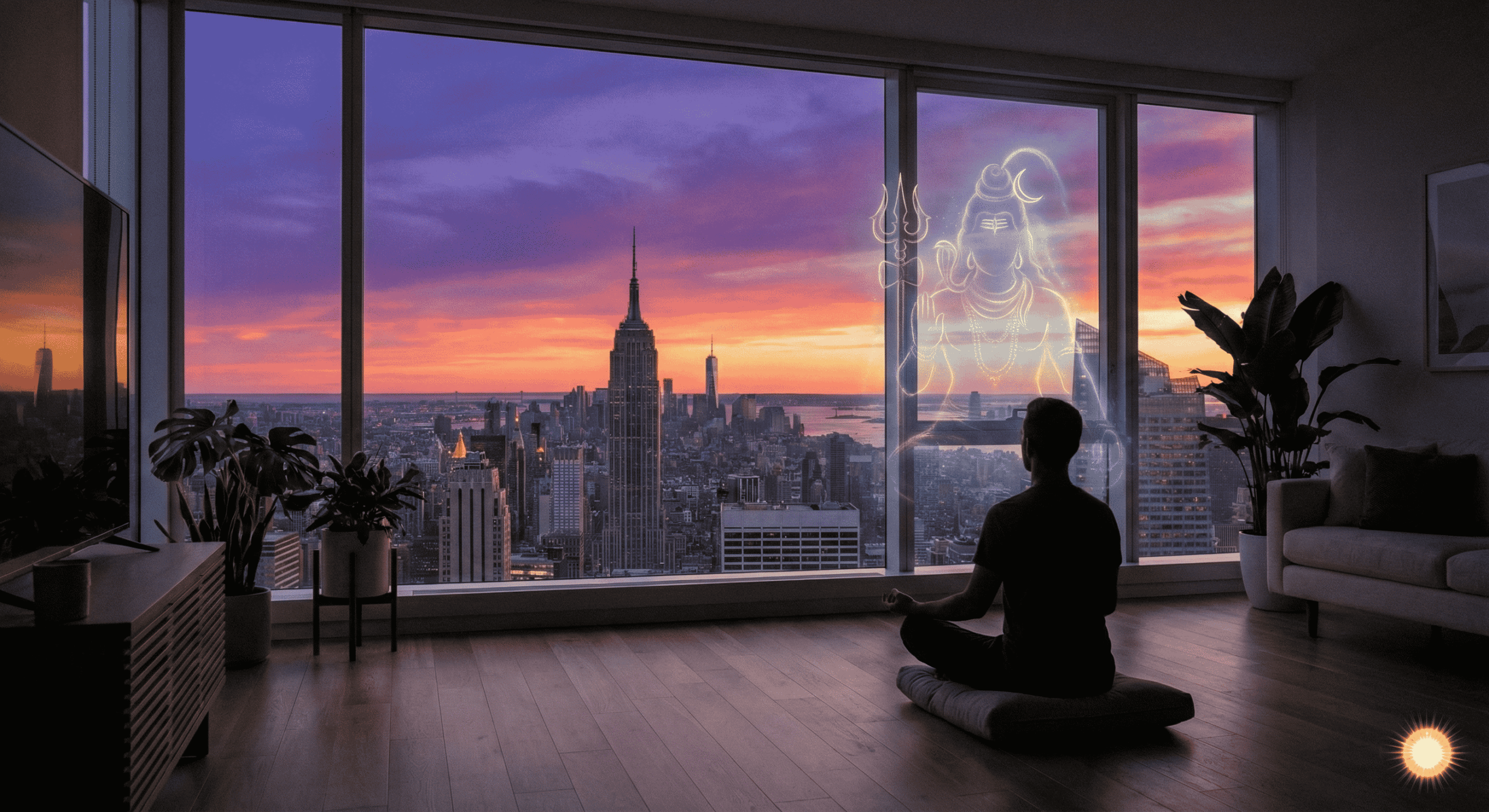
When we turn to spirituality, we often bring this same anxiety with us. We want to know the “perfect” time to meditate so we don’t “waste” our efforts. If you have been drawn to the ancient, powerful mantra of Lord Shiva, you might be wondering: Is there a specific schedule I need to follow? Do I have to wake up at 3 AM to see results?
Finding the best time to chant Om Namah Shivaya USA residents can stick to is less about rigid rules and more about understanding the rhythm of nature—and your own life.
Below is a guide to the sacred timing of this mantra, woven into a modern story of a woman who found her rhythm amidst the chaos.
The 4 AM Club vs. The Reality
Meet Elena, a 29-year-old nurse in Boston. Like many seekers, she read online that the absolute best time for spiritual practice is Brahma Muhurta—the “Creator’s Hour” that occurs roughly 90 minutes before sunrise.

Elena tried. She set her alarm for 4:30 AM. For three days, she woke up groggy, cold, and miserable. She chanted Om Namah Shivaya, but her mind wasn’t on Shiva; it was on how much she wanted to go back to sleep. By day four, she quit. She felt like a spiritual failure.
She assumed she had missed the boat. She thought, “If I can’t do it at the ‘right’ time, maybe I shouldn’t do it at all.”
It wasn’t until she met a meditation teacher at a weekend workshop that her perspective shifted.
“The best time to chant Om Namah Shivaya USA time zones allow,” the teacher told her, “is not when you should chant, but when you can chant with love.”
He explained that while ancient timings have power, Shiva is the Lord of Time (Mahakal). He exists outside of the clock.
Elena decided to stop fighting her schedule. She realized her “sacred window” wasn’t at 4:30 AM before her shift—it was at 6:30 PM, sitting in her car in the hospital parking garage before driving home. That was her transition time.
She started chanting then. The sun was usually setting. The chaos of the ER was behind her. For 15 minutes, she wasn’t a nurse; she was a soul. That evening ritual became her anchor. It didn’t just change her commute; it saved her sanity.
The Three “Golden Windows” for Chanting in the USA
While Elena found her unique rhythm, there are three specific times that yogic science identifies as highly potent for chanting Om Namah Shivaya. You can adapt these to your local US time zone (EST, CST, MST, or PST).
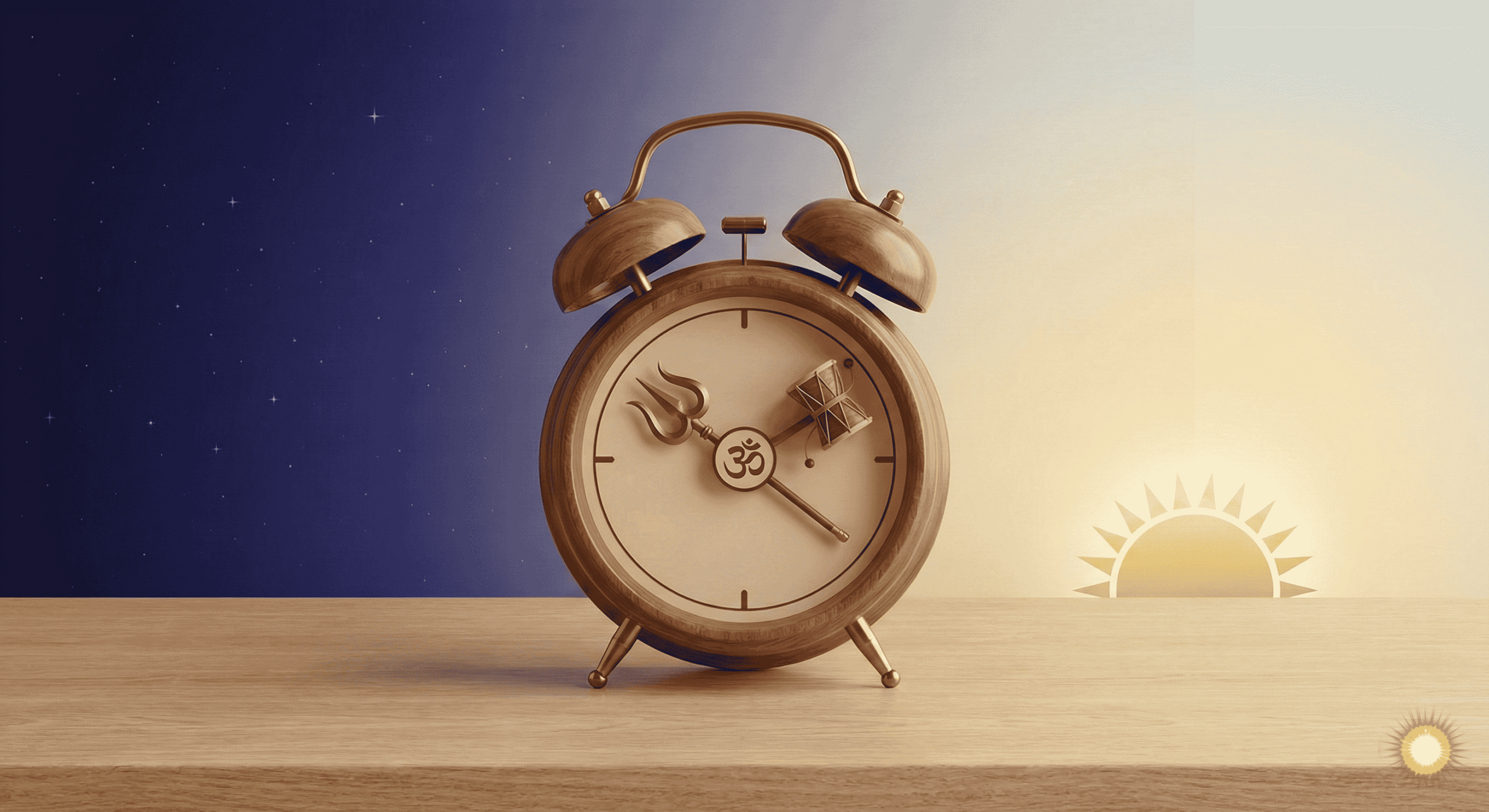
1. Brahma Muhurta (The Creator’s Hour)
When: Approximately 1 hour and 36 minutes before your local sunrise.
Why: This is physically the quietest time of day. The “static” of the world—traffic, Wi-Fi usage, collective anxiety—is at its lowest.
For the USA Seeker: If you are an early riser, this is indeed the “gold standard.” In New York, if the sun rises at 6:30 AM, your window is around 4:54 AM. The atmosphere is naturally meditative, making it easier to slip into a deep trance.
2. Pradosh Kaal (The Twilight Hour)
When: The period of 1.5 hours before and after sunset.
Why: This is the time when day dissolves into night. In Shiva temples, this is considered the time when Lord Shiva performs his cosmic dance. It is a time of transition.
For the USA Seeker: This is perfect for the “after-work” crowd. Just like Elena, you can use this time to wash off the stress of the workday. Chanting during twilight signals your brain to switch from “doing” mode to “being” mode.
3. The “Sandhya” of Commuting (The Modern Transition)
When: Whenever you are between two activities.
Why: Ancient yogis chanted during Sandhya (transitions). In modern America, our transitions are our commutes.
For the USA Seeker: Your car or the subway can be your temple. If you are stuck on the I-405 or the L Train, you are in a “gap” of time. Chanting Om Namah Shivaya here transforms “wasted time” into “healing time.”
Why Timing Matters Less Than Intention
The phrase Om Namah Shivaya means “I bow to the inner Self.” You are bowing to the consciousness that is already awake inside you.
If you obsess over the best time to chant Om Namah Shivaya USA schedules permit, you might miss the point. Shiva is known as Bholenath—the Innocent One. He is easily pleased. He does not check his watch to see if you are five minutes late for meditation.
He only checks your heart.
If you chant at 3:00 PM on your lunch break with total devotion, it is infinitely more powerful than chanting at 4:00 AM while mentally making a grocery list.
3 Tips for Integrating Chanting into American Life
Use “Trigger” Events: Don’t rely on willpower. Link your chanting to something you already do. Chant for 5 minutes while your morning coffee brews. Chant while you walk the dog.
The “Sunset Reset”: If you can’t wake up early, aim for the sunset. In the US, we often crash on the couch after work. Try replacing 10 minutes of TV with 10 minutes of chanting as the sun goes down.
Respect the Cycles: On days of the New Moon (Amavasya) or the 13th day of the lunar cycle (Pradosham), the energy is naturally higher. Mark these on your calendar. These are days to put in a little extra effort, regardless of the time.
Read more ↘️
Guided Shiva Meditation for Beginners: Unlock Inner Peace & Power (2026 Guide)
Conclusion: Your Time is Now
Don’t let the search for the “perfect” time become another source of stress. The story of Elena teaches us that the best time is the one you can actually commit to.
Whether you catch the silence of the early morning Brahma Muhurta, or you find peace in the twilight glow of Pradosh Kaal, or you simply steal a quiet moment in the parking lot—Shiva is there.
The best time to chant Om Namah Shivaya USA residents can find is simply Now.
Close your eyes. Take a breath. And begin.