

Guided Shiva Meditation for Beginners:Modern life in the USA moves at a relentless speed.
Deadlines, notifications, screens, and constant pressure keep the mind in a permanent state of alertness. Even when the body rests, the mind rarely does.
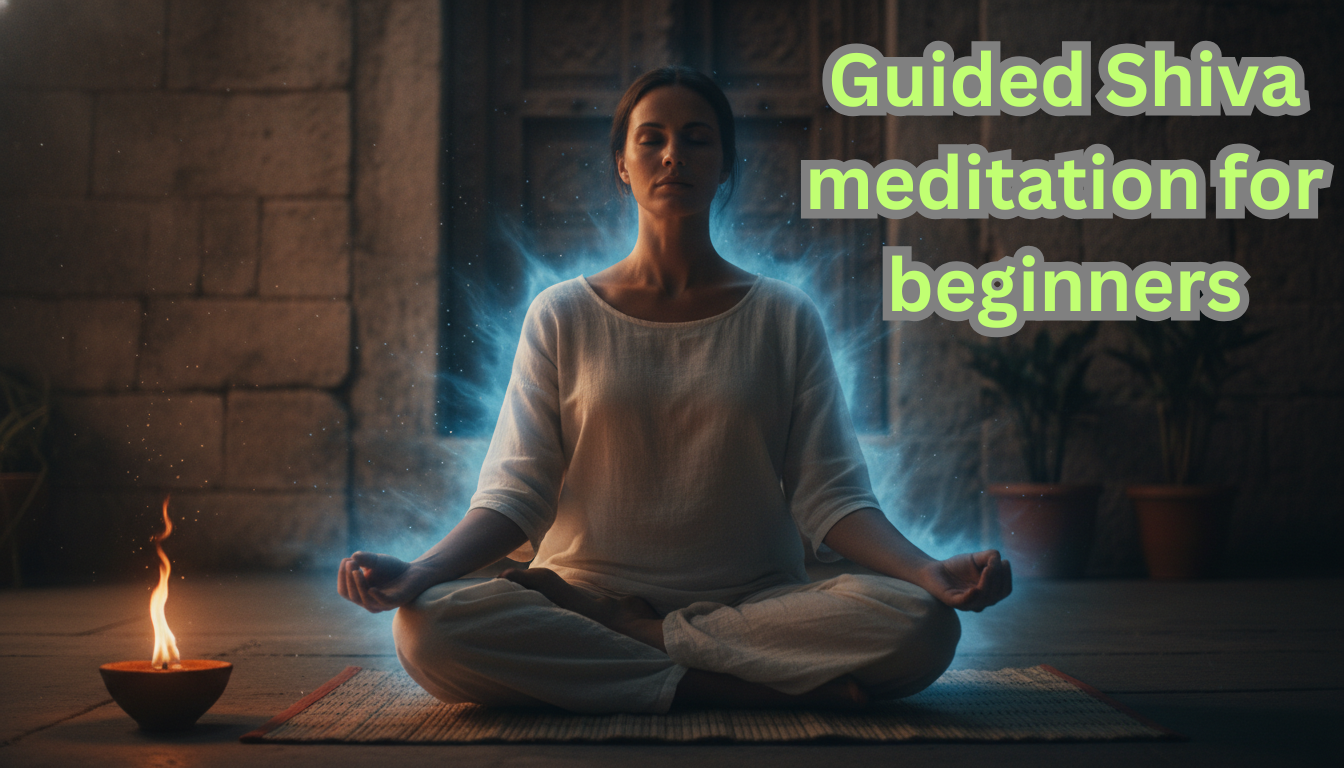
This is where Guided Shiva Meditation for beginners becomes deeply relevant.
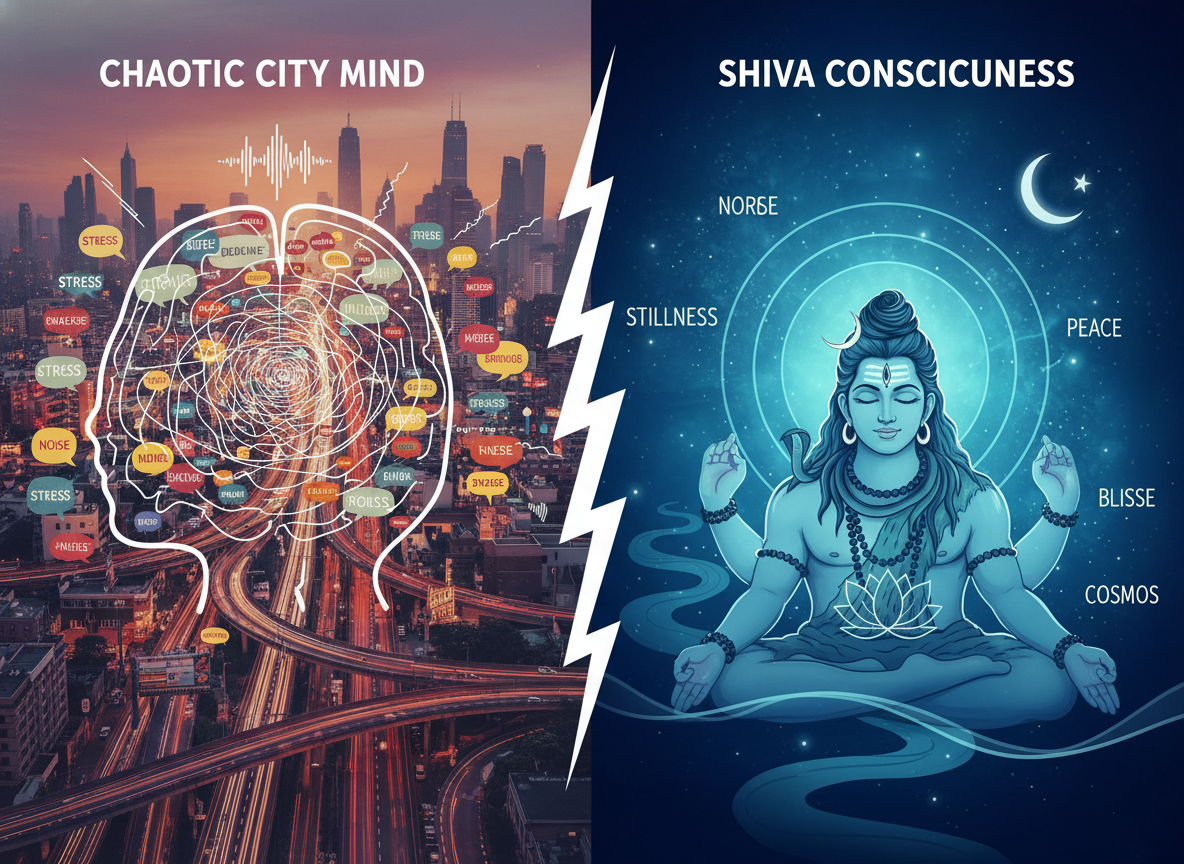
Shiva meditation is not about religion or belief. It is about learning how to access a state of inner stillness that remains untouched by external chaos. It teaches you how to sit at the calm center of your own life, no matter what is happening outside.
For beginners, this meditation offers clarity, emotional balance, and a sense of grounded strength that modern wellness techniques often fail to provide.
Understanding Shiva Beyond Mythology
In yogic philosophy, Shiva is seen as more than just a god.
The word Shiva means pure consciousness — that which exists beyond thought, emotion, and identity.
When thoughts pause, Shiva is present.
When the ego loosens its grip, Shiva is experienced.
Meditating on Shiva means connecting with:
- Awareness without judgment
- Silence beyond noise
- Stability within uncertainty
This makes Shiva meditation especially powerful for people dealing with stress, anxiety, or burnout.
Two Approaches to Shiva Meditation
1. Form-Based Meditation (Saguna):
This method uses visualization to stabilize the mind. You may imagine:
- A calm yogi seated in deep stillness
- A cool, steady presence
- A symbol such as a flame or a blue light
This approach is ideal for beginners.
2. Formless Meditation (Nirguna)
- Here, there is no image or symbol.
- You rest only in silence, awareness, and space.
- Beginners should always start with form-based meditation before moving toward formless awareness.
Why the Mantra “Om Namah Shivaya” Is Used
This mantra is central to Shiva meditation because it works on both psychological and neurological levels.
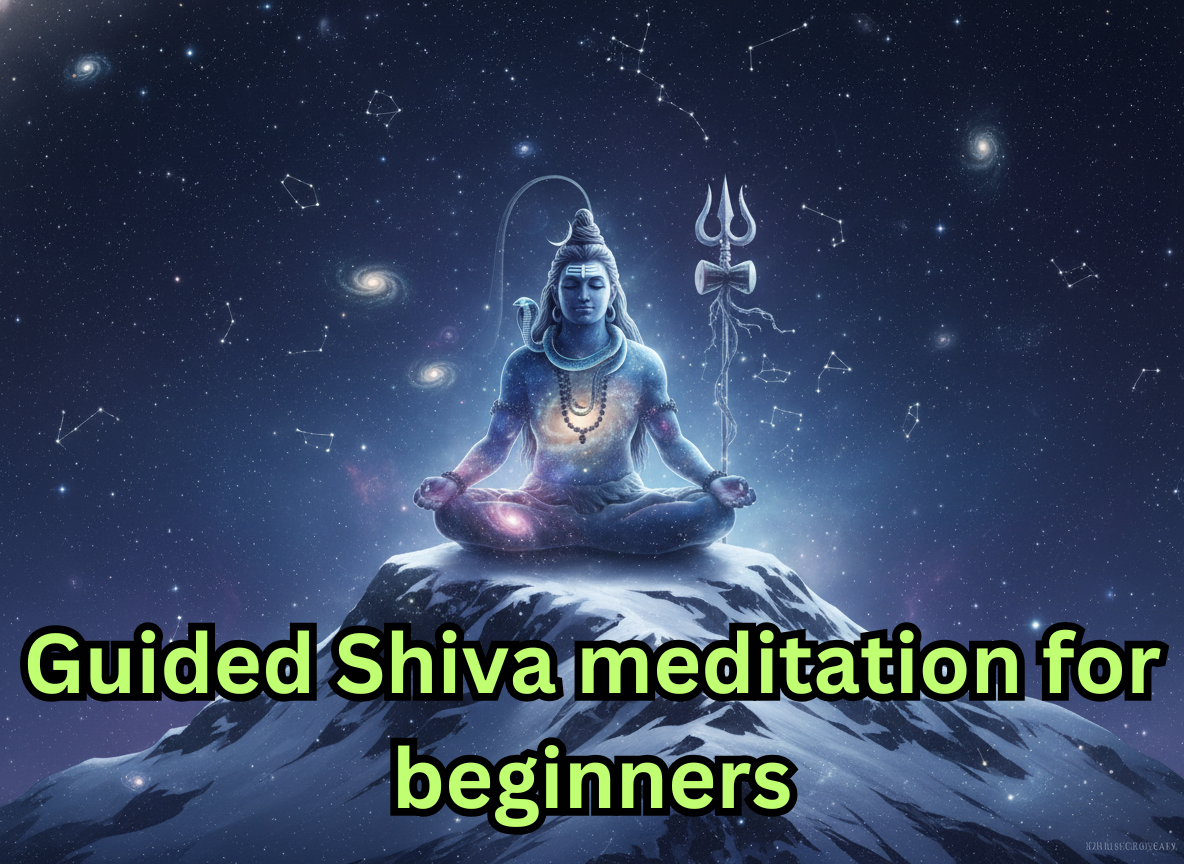
Each sound aligns with an elemental aspect of the human system:
- Na – Grounding and stability
- Ma – Emotional balance
- Shi – Inner transformation
- Va – Breath and openness
- Ya – Expansion and awareness
When repeated slowly and consciously, the mantra helps the nervous system shift from stress response to relaxation and clarity.
Preparing for Meditation (Beginner Friendly)
Best Time
- Early morning before sunrise
- Or evening during sunset
- Consistency matters more than timing.
Direction
- Facing east or north is traditionally recommended
- However, comfort and regularity are more important
Posture
- Sit upright on the floor or on a chair
- Keep the spine straight
- Hands relaxed on the knees
Avoid lying down, as it can lead to sleep instead of awareness.
Step-by-Step Guided Shiva Meditation (15 Minutes)
Step 1: Breath Awareness (0–3 Minutes)
- Close your eyes gently.
- Breathe slowly through your nose.
- With each exhale, allow tension to leave the body.
Let the breath become calm and natural.
Step 2: Visualization (3–7 Minutes)
- Bring attention to the space between your eyebrows.
- Imagine a calm, unmoving presence seated in deep stillness.
- Do not force images.
- Even a sense of quiet presence is enough.
Step 3: Mantra Chanting (7–12 Minutes)
- Begin chanting softly or mentally:
Om… Namah… Shivaya… - Let the sound move through your body.
If thoughts arise, gently return to the mantra without frustration.
Step 4: Silence (12–15 Minutes)
- Stop chanting.
- Sit quietly and observe the silence that remains.
- This silence is the essence of Shiva meditation.
Advanced Practices (Optional)
Trataka (Focused Gazing)
- Useful for improving concentration.
- Gaze at a candle flame or symbolic image
- Close eyes and retain the image internally
Neelkanth Visualization
- Helpful for emotional release.
- Imagine a soft blue light at the throat
- Allow emotional heaviness to dissolve without resistance
Common Beginner Mistakes
- Expecting visions or dramatic experiences
- Practicing irregularly
- Chanting without awareness
- Progress in meditation is subtle. Inner stability grows quietly over time.
Bringing the Shiva State Into Daily Life
Shiva meditation is not limited to the cushion.
Practice:
- Pausing before reacting
- Observing emotions without identifying with them
- Maintaining inner distance during stressful situations
This is the true purpose of the practice.
Conclusion: Stillness Is Strength
Guided Shiva Meditation for beginners is not about escaping life.
It is about learning how to remain stable within it.
When you meditate on Shiva, you are not seeking something external.
You are reconnecting with a dimension of yourself that is already whole, silent, and strong.
Sit quietly.
Breathe consciously.
Let stillness reveal itself.
Om Namah Shivaya
Read more ↘️
How to Connect with Shiva Spiritually: A Guide to Mantras, Meditation & Wallpapers
FAQ:
Can beginners in the USA practice Shiva meditation?
Yes. No cultural or religious background is required.
Is a vegetarian diet necessary?
No. A lighter diet may help, but it is not mandatory.
What if visualization is difficult?
Focus on sound or breath instead. Visualization improves naturally.
Why do emotions surface during meditation?
Meditation releases stored mental tension. Emotional responses are norma
I like your article
Thank you! Om Namah Shivay 🙏🙏