

In the chaotic dance of modern life, do you ever feel your inner world spinning out of control?
Like a boat tossed on a stormy sea, we often search for an anchor, a stillness that feels just out of reach. My dear friend, that profound calm you seek is not a distant dream; it is an ancient secret, embodied by the serene stillness of Lord Shiva, the Adiyogi, the first yogi. Learning how to stay calm like Lord Shiva is not about renouncing the world, but about mastering your inner universe.

This is not just another article on stress management. This is an invitation to journey inward, blending timeless Vedic wisdom with practical steps for your modern life. We will explore how Ayurveda, the science of life, and the sacred practices of yoga can help you cultivate an unshakeable core of peace, a stillness so deep that the outer storms cannot touch you.
The Divine Stillness: Understanding Shiva’s Calm
When we see images of Lord Shiva, He is often depicted in deep meditation atop Mount Kailash, a gentle smile on his face, with the tumultuous river Ganga flowing peacefully from his matted locks. This imagery is not just mythology; it is a powerful metaphor for the human potential for inner peace. Shiva represents the ‘Turiya’ state, the fourth state of consciousness beyond waking, dreaming, and deep sleep. It is a state of pure awareness, untroubled and serene.
His calmness is not a passive state; it is a dynamic, powerful presence. He is ‘Sthanu’, the unmoving pillar, yet He is also ‘Nataraja’, the cosmic dancer. This teaches us a profound lesson: true calm is not the absence of activity, but the ability to remain centered amidst all of life’s movements. It’s about finding the eye of the storm within yourself.
The Ayurvedic Key: Balancing Your Vata Dosha
Ayurveda teaches us that our mental state is deeply connected to our unique mind-body constitution, or ‘Dosha’. The primary culprit behind anxiety, racing thoughts, and a feeling of being ungrounded is an imbalanced ‘Vata’ dosha. Vata is composed of the elements of air and ether. When it’s in balance, it governs creativity and enthusiasm. But when it’s aggravated by stress, irregular routines, and improper diet, it creates mental turbulence—just like a strong wind.

To cultivate Shiva-like stillness, we must first learn to pacify our Vata. This is the foundational step in Ayurvedic mental wellness. It involves creating routines that are grounding, warming, and nourishing.
- Listen to your body: Do you feel scattered, restless, or forgetful? These are classic signs of high Vata. Acknowledging this is the first step toward healing.
- Seek warmth and stability: Vata is cold and mobile. Counteract this with warm foods, gentle routines, and stable environments.
1. Nourish Your Calm: The Sattvic Diet for Mental Clarity
What you eat directly impacts your mind. Ayurveda categorizes food into three qualities (‘Gunas’): Sattva, Rajas, and Tamas.
- Sattva: Pure, light, and nourishing. Promotes clarity, peace, and harmony. Think fresh fruits, vegetables, whole grains, nuts, seeds, and fresh milk.
- Rajas: Stimulating and agitating. Leads to restlessness and passion. Includes spicy foods, caffeine, onions, and garlic.
- Tamas: Heavy, dull, and dense. Causes lethargy and mental fog. Consists of processed foods, leftovers, meat, and alcohol.
To achieve a calm mind, you must embrace a ‘Sattvic’ diet. This isn’t about restriction; it’s about conscious nourishment. Imagine you are making an offering to the divine temple that is your body. Choose foods that are alive with ‘Prana’ (life force energy). A warm, soothing bowl of oatmeal for breakfast, a colorful vegetable curry for lunch, and a light lentil soup for dinner can do more for your mental health than you can imagine.
2. Breathe into Stillness: The Power of Pranayama
Your breath is the bridge between your body and mind. When your mind is agitated, your breath is shallow and rapid. When you are calm, your breath is deep and slow. ‘Pranayama’, the yogic science of breath control, is a direct tool to calm the nervous system.
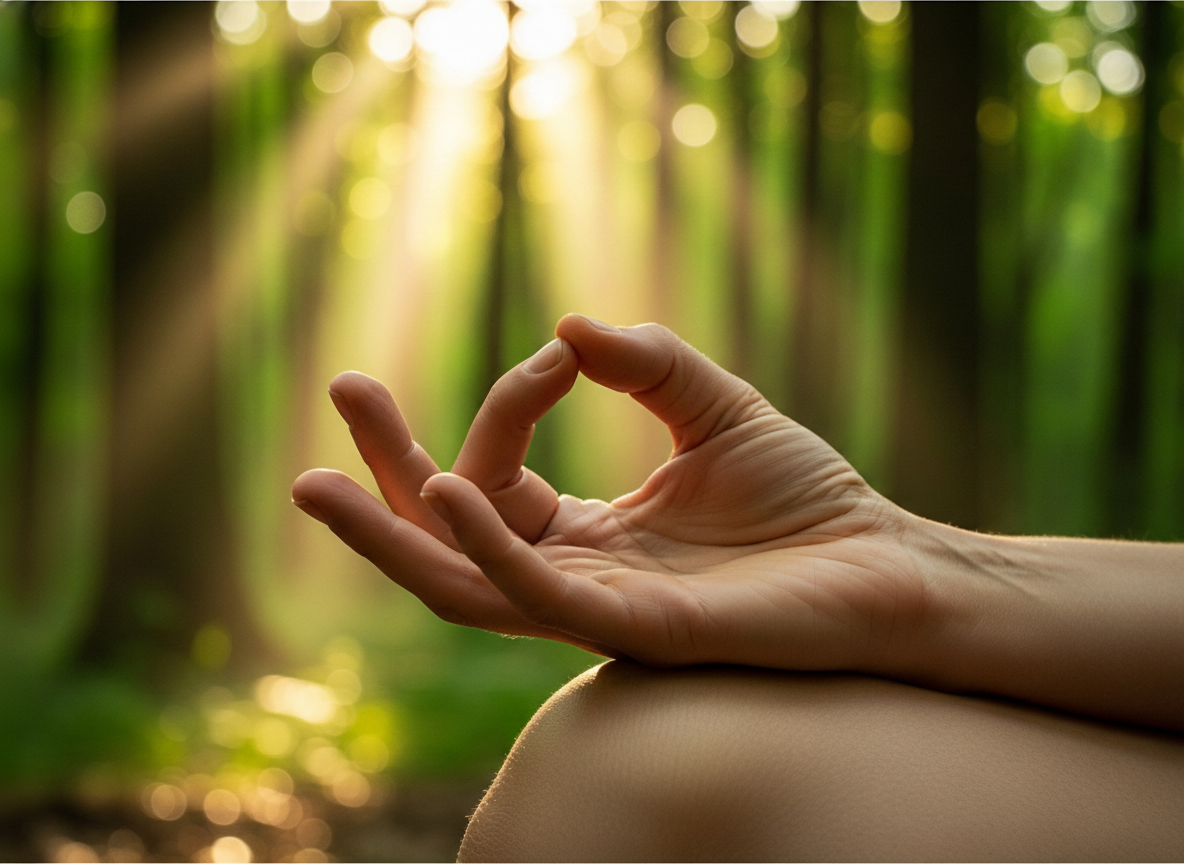
Nadi Shodhana (Alternate Nostril Breathing)
This is the king of calming pranayamas. It balances the left and right hemispheres of the brain, purifies the energy channels (‘Nadis’), and instantly soothes an anxious mind.
- How to practice: Sit comfortably with a straight spine. Close your right nostril with your right thumb and inhale slowly through your left nostril. Close your left nostril with your ring finger, release your thumb, and exhale slowly through your right nostril. Now, inhale through the right, close it, and exhale through the left. This completes one round. Begin with 5 rounds and gradually increase to 10-15.
This simple practice, done daily, can profoundly shift your baseline mental state from anxious to peaceful.
3. Ground Your Energy: Yoga Asanas for Stability
Physical movement is essential for releasing pent-up stress and Vata energy. However, the goal is not a high-intensity workout that further agitates the system. We need grounding, stabilizing yoga poses (‘asanas’) that connect us to the earth.
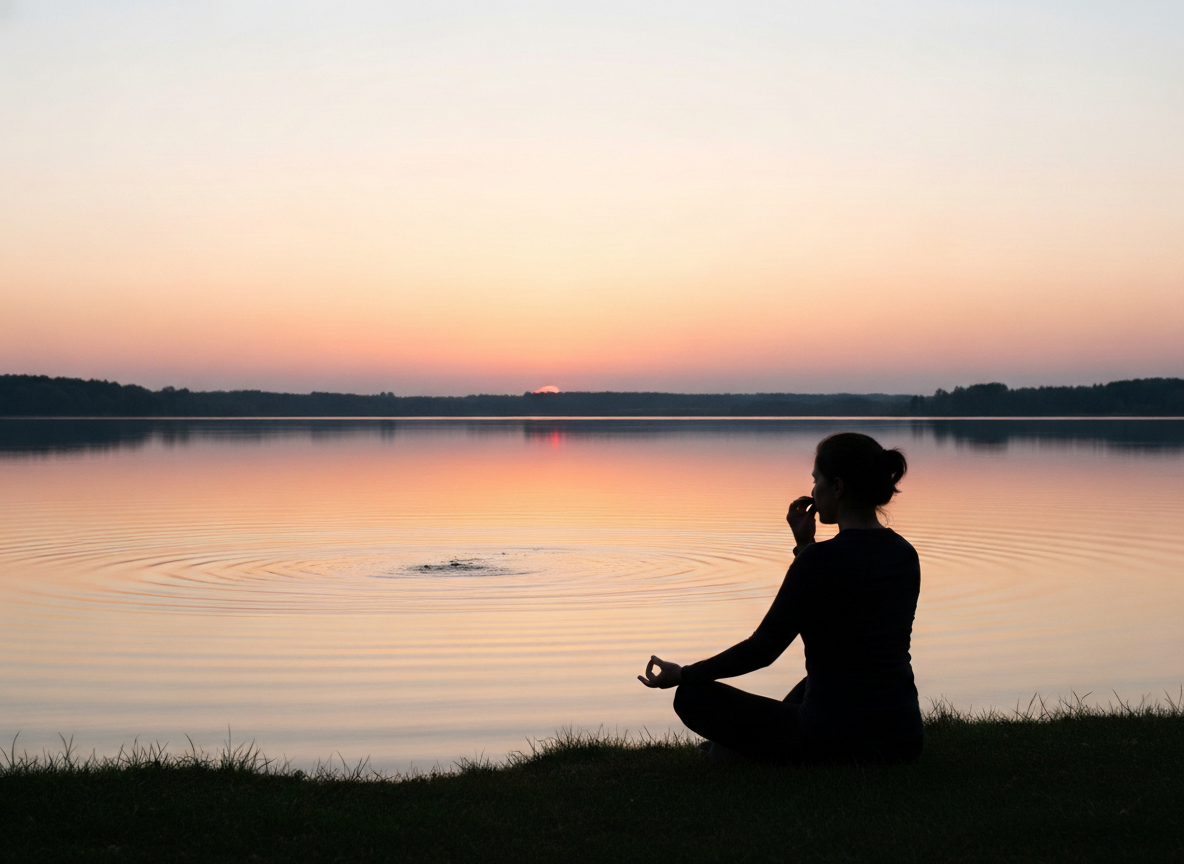
- Tadasana (Mountain Pose): Stand with your feet together, press all four corners of your feet into the ground, and lengthen your spine. Feel the stability of a mountain. This simple pose teaches you to be present and rooted.
- Virabhadrasana II (Warrior II): This pose builds strength and focus. As you gaze over your front fingertips, you cultivate a steady, unwavering focus, just like a warrior.
- Balasana (Child’s Pose): This restorative pose is an act of surrender. It calms the brain and relieves stress and fatigue. It is a beautiful way to turn your attention inward and listen.
4. Embrace the Silence: The Path of Meditation (Dhyana)
Shiva is the ultimate meditator. Meditation is the art of witnessing your thoughts without getting entangled in them. It is the practice of returning to your center, again and again.
Don’t be intimidated by the idea of ’emptying your mind’. That’s a myth. The goal is simply to observe. Start with just 5 minutes a day.
- A Simple Technique: Sit comfortably, close your eyes, and bring your awareness to your breath. Notice the sensation of the air entering and leaving your nostrils. Your mind will wander. That is its nature. When it does, gently and without judgment, guide it back to your breath. Every time you bring it back, you are strengthening your muscle of awareness.
5. The Vibrational Remedy: Chanting the ‘Om’ Mantra
‘Om’ (or Aum) is considered the primordial sound of the universe. Chanting this sacred mantra creates a vibration that resonates through every cell of your body, calming the mind and nervous system. Lord Shiva is often called ‘Omkara’, the embodiment of Om. When you chant Om, you align your own energy with the cosmic, peaceful vibration of creation.
6. Connect with Nature: The Ultimate Healer
Mount Kailash is not just a physical location; it represents the peak of consciousness, surrounded by the raw, untouched beauty of nature. Spending time in nature is one of the most effective ways to pacify Vata and calm the mind. Walk barefoot on the grass, listen to the rustling leaves, watch a sunset. Nature reminds us of a rhythm that is greater than our own anxieties.
7. The Art of Detachment: Vairagya
Perhaps the most profound secret to Shiva’s calm is ‘Vairagya’, or detachment. This does not mean being cold or uncaring. It means understanding that you are not your thoughts, your emotions, or your circumstances. You are the silent witness behind them all. Practice observing your feelings without letting them define you. When anger arises, simply say to yourself, ‘I am aware of anger arising in me’. This simple shift in perspective creates a space between you and the emotion, preventing it from consuming you.
Important Takeaways for Your Journey to Calm
- Start Small: Don’t try to change everything at once. Pick one practice, like Nadi Shodhana, and commit to it for a week.
- Be Kind to Yourself: There will be days when you feel less calm. That’s okay. The path is not linear. Treat yourself with the same compassion you would offer a dear friend.
- Consistency over Intensity: A gentle 10-minute daily practice is far more powerful than a strenuous 2-hour session once a month.
- Professional Guidance: While these practices are safe and powerful, if you are struggling with severe anxiety or mental health issues, please consult a qualified healthcare professional or an Ayurvedic practitioner.
Read More ↘️
Shiva-Inspired Morning Routine for Mental Clarity: An Ayurvedic Guide
Short FAQs
- How long does it take to feel calmer with these practices?
You can feel an immediate sense of relief after a single session of Pranayama or meditation. However, creating a lasting state of inner calm is a gradual process. With consistent practice for a few weeks, you will notice a significant shift in your baseline stress levels.
- Can I practice these techniques if I am not religious?
Absolutely. While we draw inspiration from the symbolism of Lord Shiva, these are universal human technologies for well-being. Yoga, meditation, and Ayurveda are sciences of the mind and body that transcend any single belief system.
- What is the single most important thing for reducing anxiety?
If you had to choose only one, focus on your breath. Your breath is always with you and is the most direct tool to influence your nervous system. A few slow, deep breaths can change your mental state in under a minute.
- Is a Sattvic diet difficult to follow?
It’s simpler than it sounds. Focus on eating fresh, whole, and unprocessed foods. Think of it as ‘clean eating’ with an emphasis on plant-based meals. It’s about adding more nourishing foods rather than just eliminating others.
A Final Thought from a Caring Heart
My dear friend, the journey to inner peace is the most sacred pilgrimage you can take. The stillness of Shiva is not on a distant mountain; it resides in the quiet cave of your own heart. By nourishing your body, calming your breath, and witnessing your mind, you awaken this divine potential within you.
Be patient. Be gentle. You are a student of life, learning to dance with grace amidst the chaos. May you find the unshakeable peace that is your true nature.
For more devotional wallpapers, meditation guides, and wellness articles, visit LordShivaImages.com.
1 thought on “How to Stay Calm Like Lord Shiva: 7 Vedic Secrets for Inner Peace”